Hello My Name Is…Michael Marcagi
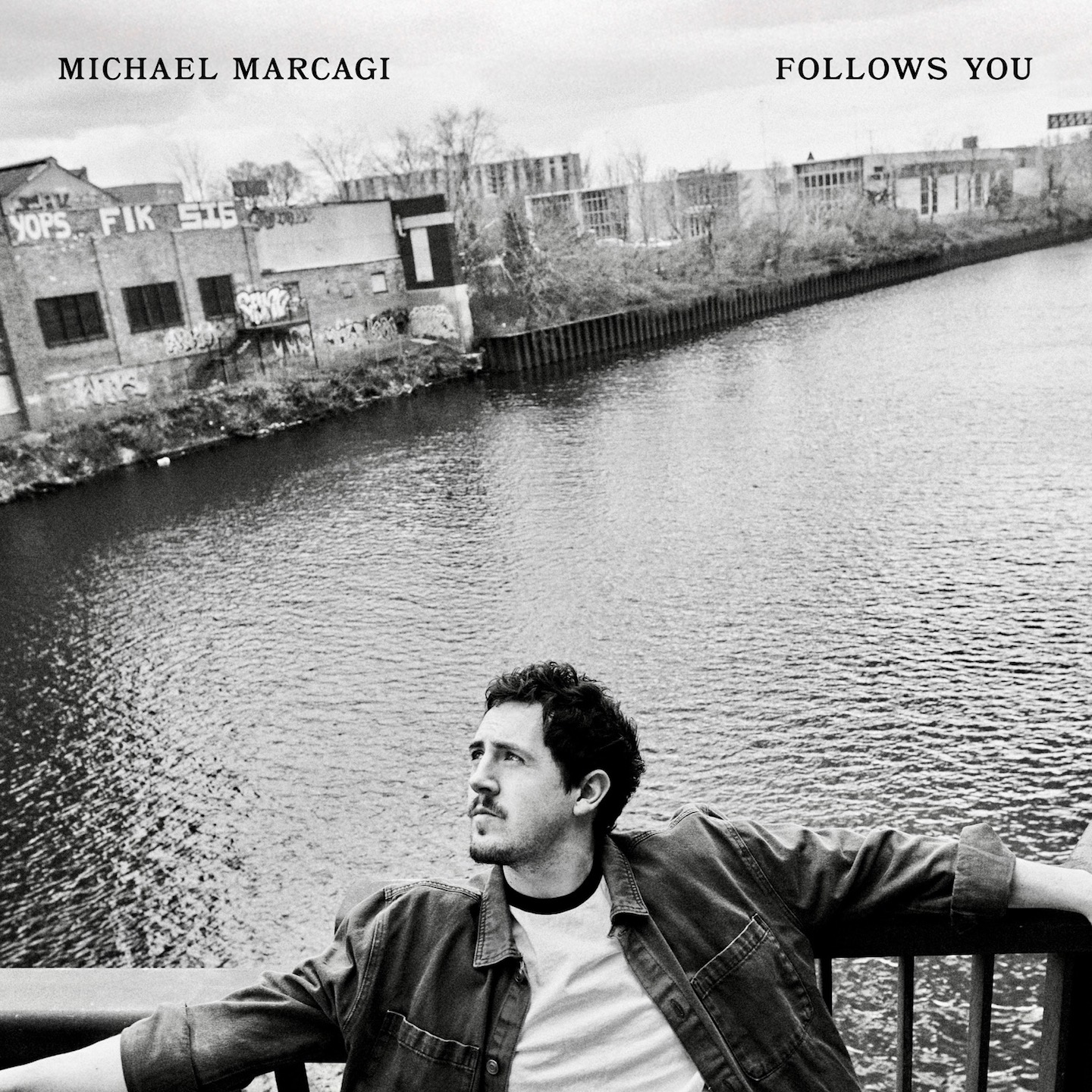
Michael Marcagi
Write what you know, goes the old Mark Twain-attributed creative imperative. It’s wisdom not lost on singer-songwriter Michael Marcagi, who once felt that his humdrum hometown of Cincinnati, Ohio, was no great shakes in the inspiration department. So how could he possibly ever hope to compete with edgier streetwise artists from New York or Los Angeles? Now a seasoned 34, he managed to find a way — simply by singing about himself, in all his Midwest glory. And fans, who found his homespun candor and straightforward guitar melodies rather refreshing, came flocking.
And the composer hit pay dirt with his very first 2024 single, “Scared to Start,” a Springsteen-urgent, let’s-ditch-this-dead-end-town ballad, which showcased his autumn-brisk singing voice, way with a humongous, toe-tapping hook, and a clever habit of buttressing many of his choruses with Gospel-huge backing vocals. Soon, it was being used on countless TikTok memes, and people wanted to hear more. So, through two EPs and a brand-new official debut disc, Under the Streetlights, he sang of where he’d been, in self-explanatory anthems like “Flyover State,” “Midwest Kid,” and “Rock Steady,” featuring Jade Bird, and “Wish I Never Met You” co-written with and boasting a duet with lead Lumineer Wesley Schuiltz.
“I think that I’ve really learned to love where I’m from,” confesses Marcagi, whose record artwork usually features a rustic shot of him in a rustic Midwestern outdoor setting. “I used to be a thing where I did not think I had a chance, or felt like what I had to sing about was important, so I thought it would just be overlooked. But I think now that I’ve found my identity in the music scene, and figured out what I want to sing about…and I think that I’ve also realized that these things that I thought were way more universal…Like, I used to think that growing up in a flyover state and the feelings that I had were unique to just me. But now I don’t think that’s true at all.”
And with each successive release, Marcagi gets closer and closer to folk-pop perfection, all while maintaining his Regular Joe affability. He doesn’t really comprehend just how big a star he’s bound to become, and that’s a good part of his winning charm. Luckily, he had some extra time to speak to the IE before his career really took off…
IE: That grainy black and white shot of you on a bridge on the back cover of your EP: Midwest Kid – was that shot in your hometown?
MICHAEL MARCAGI: Well, it actually looks a lot like Cincinnati. But I was actually in Chicago that day. We took that since I was playing a show at Thalia Hall in Chicago, and we went out and walked around a little bit beforehand. And there was just something about (that shot) that reminded me a lot of Ohio, and Chicago’s still the Midwest. And where I grew up, my house kind of overlooked the Ohio River, and it just reminded me of home.
IE: Why choose guitar? And when did you discover you had a unique singing voice?
MM: Well, I’m the youngest, and so my brother and sister kind of went off to college when I was still decently young, and I remember my parents got me a guitar for Christmas when I was probably in 7th grade, and I think it was kind of a thing where they knew I was gonna be lonely without having siblings around. And so they figured I could try to learn something new to keep me occupied. And my family – even though no one played any instruments – everyone was pretty musical. My mom just loved old music and introduced me to a lot of really cool singer-songwriters. So I think when I finally learned how to play guitar and learned how it all works, I kind of fell in love with the whole thing — I fell in love with songwriting, fell in love with learning how to play the guitar. It was fun.
IE: What is it about the Midwest that gives you life-lasting values?
MM: I think for me, I just never was expecting to have all the opportunities that I’ve been given. There wasn’t much of a music scene in Cincinnati, and even with the small music scene that there is, I never felt like truly a part of it. So I always just kind of viewed it as a thing of, “Oh, I don’t stand a chance against the bands from L.A. and New York.” So maybe I had a chip on my shoulder, but I also felt just kind of like this imposter syndrome, like a regular old dude from Cincinnati isn’t going to crack through in the music industry. I think the reality of it was, I did have more of a chip on my shoulder, because I wanted to try to get out a little bit and see what I had compared to those other people. So there are a lot of things like that that I take from being from the Midwest.
IE: Can you name some of the advantages that clicked for you, in chronological order?
MM: Yeah. And it happened pretty quick. I was in a band with some high school buddies for a long time, called The Heavy Hours. And we tried our hardest, ground it out, and played a lot of shows. But we played a lot of shows where we just saw tables and chairs in the venues — just empty rooms, essentially. And that project just naturally faded away – some of the guys wanted to get married, some were having kids, so it just kind of naturally ended. And then I was the single guy in the band, and I still wanted to try a little bit. So I just released a couple of songs under my own name. And I wasn’t good at – or didn’t know anything about – social media, but a song had this weird little rocket ship moment on social media, and it just kind of opened up all these doors. The song got exposed to millions of people in an overnight span when I’d just released a little snippet of it on Instagram and TikTok. But it had this moment where people started using it for their own videos – it just got all this momentum, and people were asking me to release it. And the song wasn’t even done yet – That was the funny part. I had to go back to the studio, and the name of the song was “Scared to Start.” So I ended up releasing that song, and that opened the door for me to get signed by Warner Records, and then I got to play shows and go on tour and open up for people. I got to open up for The Lumineers, who I’d looked up to since I was 16 years old. And all of these opportunities that I truly, truly never thought I’d get to experience kind of all happened within a span of six months.
IE: And didn’t a Lumineer actually help you out in the studio?
MM: Yeah! I’ve written a song with Wes (Schultz), the lead singer of The Lumineers, and he’s become a real friend and mentor of mine, and he’s an amazing dude. The whole band is awesome — they’re honestly really, really great, and they’ve treated me amazingly. So I got to play shows with them, I got to do a headline tour in Europe, which was amazing. I got to see all these new cities that, again, I never thought that I’d even get to go on vacation to, let alone play a show in. So that was really fun to see. But it honestly was just a shock for me — I went so long not seeing a single person in the audience to like see people sing along with the songs and connect with them. That one is still hard for me to believe that it’s true. But yeah — people have started singing along with the songs, and again, it’s one of those things, so every night, it’s a pinch-me moment, where it’s hard to believe that something that you wrote in your bedroom and were depressed and wanting to give up music, and now people are singing along to that song. So it’s ironic and crazy and hard to believe.
IE: “Don’t Include Me” sounds like a crucial track.
MM: Yeah. That was the first song I wrote for the new album, and that’s kind of how I wanted the new album to sound, kind of like the ethos for the whole new album. So yeah, it was one of my favorite songs that I’ve written, and growing up in the Midwest, too, I think I saw a lot of my friends get married young, and I got to the age where I saw some of their relationships fall apart pretty quickly. So it was about that kind of theme, about the pressures of some of the relationship things that happened in the Midwest, where I’m from.
IE: Can you name a couple of times when your Midwest morals affected a showbiz decision?
MM: I think so. And for me, I think the music industry was just off the bat an intimidating place. I had only been to L.A. once in my life before I signed with Warner, and they’re located out there. So I just felt like it was a little bit of an intimidating place. But for me, growing up, just the advice I was given was only work with people that you really, really trust, people who you think have your best interests at heart. So I think that’s what I’ve just tried to do – work with people who have a passion for music, and a passion for making great art, and also people who just care about people. I want people that I’m working with to care just as much about how I’m doing as a person, as opposed to how the music’s doing. And I’ve always tried to make decisions based on that. And when I was looking to sign with a label, Warner really felt like a family, felt like home. It just felt like a good place, and I’ve been super-happy. So I’m just trying to find people who are in it for the right reasons, I guess.
-Tom Lanham
Category: Featured, Hello My Name Is, Hello My Name Is