Hello My Name is…Gary Klebe of Shoes
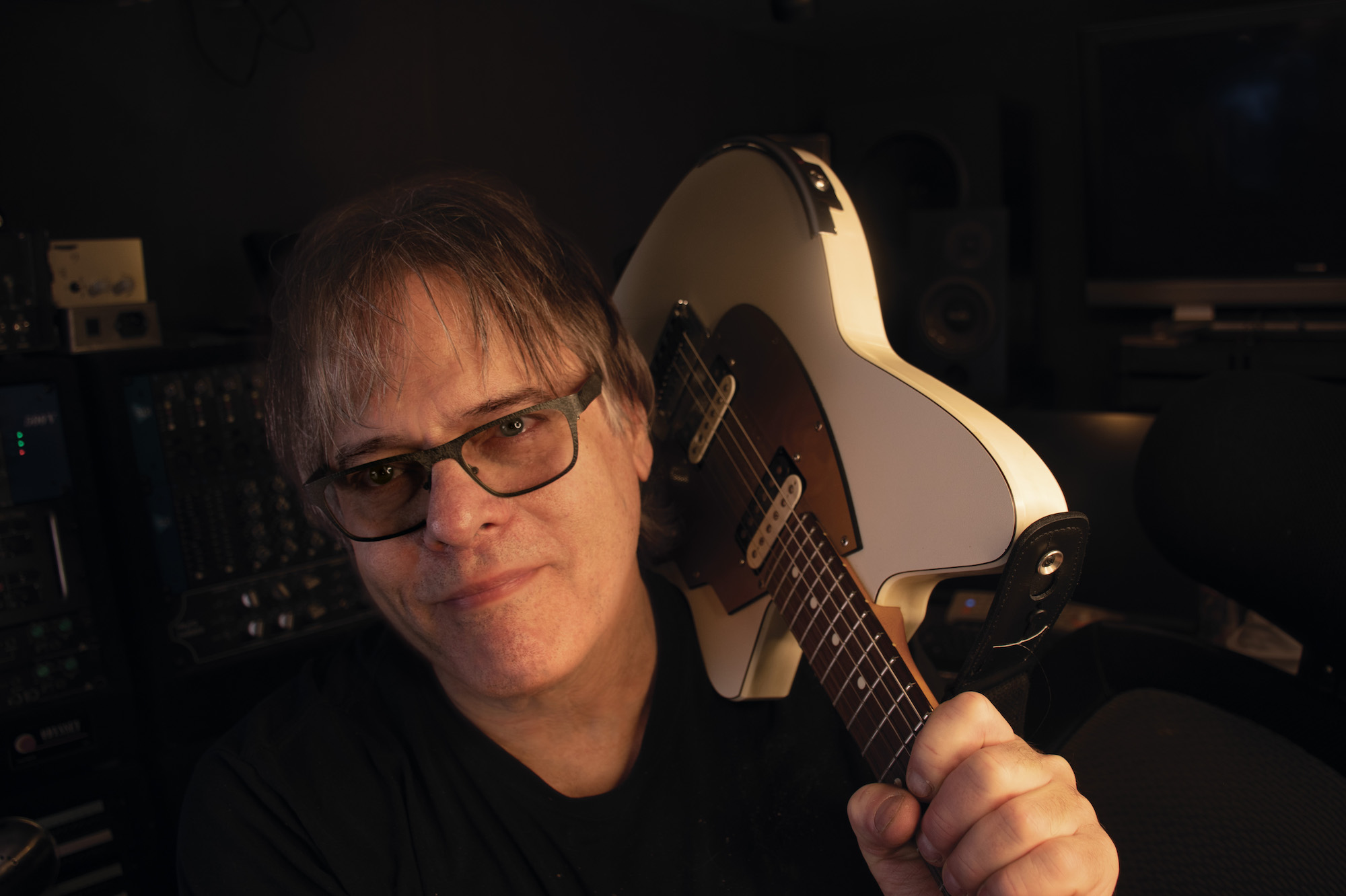
Gary Klebe
As Shoes guitarist/vocalist Gary Klebe remembers it, he never really entertained the notion of cutting his first solo disc at the seasoned age of 73, as he’s just done with the shimmering new Out Loud set, issued on the band’s longtime personal imprint, Black Vinyl Records. In fact, whenever he would stop to review its growing catalog of tracks, he would feel less assured, even more doubtful. “So to be honest, I still wasn’t sure that I would ever release it, because I just didn’t feel quite right on my own,” he sighs. “And even when I saw that I had a full record’s worth of songs, eleven, I didn’t know that anyone would really care about it, so I was just ready to give up on it and shelve it.” But fate found an unexpected way of calling his bluff.
The Zion, Illinois native knew it was possible to go it alone, while Shoes’ other two founding members, the brothers Jeff and John Murphy (on guitar and bass, respectively, and temporarily on studio sabbatical); Jeff had already put out his own solo project, Cantilever, back in 2007, with no snags compromising the next cohesive Shoes album, Ignition in 2012.
And ever since its formation in 1974, he declares, “Shoes were all I cared about — that was my Number One priority, and it is to this day. And after ‘Ignition,’ I wanted to keep going with another album. But as time has gone on, it’s just been harder for all of us to get together to do them.” And Klebe admits that this is partly due to their unique creative process — each member has grown comfortable privately writing three to five tunes, after which they finally get together to compare notes before combining them into one full-length record. But this time, he just kept right on composing, quietly pleased that he’d stockpiled so much. Eventually, news of his achievement reached Klebe’s old Midwest buddy, Garbage maestro — and producer of Nirvana’s classic Nevermind — Butch Vig, who asked to hear the Out Loud tracks.
“But I still didn’t feel quite right being on my own,” Klebe says. “I was almost ready to give up on it and just shelve it, so when we did another Shoes record, I’d have a ton of stuff to choose from.”
The keen-eared Vig strongly disagreed. He listened to the Merseybeat flourishes of “Room to Breathe,” the rattlesnake rhythms of “Wrong All Along,” the big crescendoed chords of “No Afterglow,” an instantly-chugging “Bridges Are Burned,” and the jagged riff of “Shake Me” — every cut frothing with Shoes’ trademark fuzzy/sharp guitar and velvet-textured vocals (usually Klebe’s airier voice combined with the fluffier tones of the. Murphy siblings; this time it’s all just multi-ply Klebe, who sang all parts and played every instrument but drums, which were tracked in Nashville with John Richardson. And Vig had only one urgent suggestion: Why wasn’t this sparkling power-pop masterpiece available for purchase yet? “Butch really convinced me that I really needed to get it out and to do it for myself, if nothing else,” he says. “Like, don’t have any expectations — just have the attitude that you’re doing it for yourself. So he seriously encouraged me to keep moving forward with it.” He also took the time to check in with his longtime Shoes-geek supporters at the Illinois Entertainer for a wide-ranging chat….
IE: First of all, how is Jeff (Murphy)? I’ve always talked to him for past stories.
GARY KLEBE: He’s doing good. Unfortunately, he and John’s mother passed away about three weeks ago, so he’s been getting past all of that. But I guess it’s what we all have to go through eventually.
IE: How’s your own health? And are you married? Have any kids?
GK: No, I’m not married, and my health is pretty decent, I guess, for my age. And no kids. So things could always be better, but hey — that’s life.
IE: Looking back on those three incredible Elektra albums, songs like “In Her Shadow” and “Summer Rain” still resonate, timeless, undiminished over the decades. And as you all traded off on lead vocals, which were the signature ones you sang?
GK: That first one, “In Her Shadow,” I think that’s off of Boomerang, our third one for Elektra. And then Jeff also sang “Summer Rain.’ I forgot what I sang on that one. “Double Talk,” I know, and “Curiosity,” The Tube,” I think was one. But yeah, we’ve traded off with songwriting and singing, and that’s kind of been our trademark, I guess.
IE: Are you still living in your old hometown of Zion, Illinois?
GK: I live on the other side of the border — I live in Wisconsin, but I’m only 20 minutes away. And that’s where I’m from, all of us, but we all live across the border, but we’re nearby.
IE: What are you singing about on this one? You used to focus on unrequited love, but now it feels more like self-recrimination, like, “Hey — maybe I was the one to blame!”
GK: Yeah. The people who are doing the publicity for me were trying to get me to verbalize more with some thoughts on the song, which I never felt that comfortable about. I thought, ‘Well, the words should just speak for themselves, I guess.” And when I started writing about songs, it was a different perspective on ‘em, so I would say that lyrically, it used to be much easier to write songs. I think I’ve improved, and there are times when I might’ve gone too far with being a little too complicated, much more than necessary, until I’m kind of losing the focus of what I’m singing about. But for this one, though, I was really happy with the lyrics in general. This is what I wanted to do, and it took a long time because that’s the hardest part for me.
IE: “Won’t Quit on You” sounds like it’s about a current relationship….
GK: You know, it’s not. And every girlfriend I’ve had has always asked me, “Did you write about me?” And “Is this song about me, or some other girl?” And I always say that I very seldom have written a song that’s about one specific woman, or a relationship with anybody. It’s a combination of things, and even one verse might come from a relationship, something specifically that happened. And it’s not to say that girlfriends don’t influence lyrics — they do. It’s just more in pieces, and it’s spread out between different songs.
IE: Why title the album Out Loud?
GK: It doesn’t really have a big meaning — it just sounds like expressing myself, I guess. It’s just me expressing myself.
IE: All of your early records were done using relatively primitive technology. How have all the recent improvements in technology made your job easier? And do you fear or welcome AI?
GK: Oh, that’s a whole different can of worms there, AI. But the big change, of course, is going from analog into tape into digital, and one would think that it’s all good, because there’s more tracks and an unlimited amount of plug-ins for effects, compressors, equalizers, and reverb — that sort of thing. And you’d think that would be a good thing. But it also just puts more colors on the palette, and what you think is good can make it more difficult to make decisions. So you have to be careful with the technology — there are way more options and unlimited tracks. I mean, keep in mind that we started off with a stereo at first and then a four-track, and we did the best we could with that. But we couldn’t have imagined that we would eventually have 200 empty tracks to fill. But that can work against you, too, because then, when do you stop? So you have to have discipline, which is what I’m saying, and try to think of it still in the analog world.
IE: And now you can just multi-track your own voice into that trademark ethereal blend.
GK: Yeah, we worked really hard on all that stuff. And you can really do more with digital, but you can also overdo it, too. If you have too much overdubbing, it can sound homogenized and not as dynamic. So again, you have to be careful with it, but it’s an amazing technology. And it’s allowed anyone to make a record, essentially. You can just employ Apple’s GarageBand — it’s cheap, and you buy a little interface, and you’re ready to go — you’re making records.
IE: In a nutshell, what was your experience on Elektra like?
GK: It was the most exciting time of my life, and I think we all would say this — it was the most frustrating, too. All of the things you’ve heard about record labels? It’s all true, you know? And it is a business at the heart of it all, and that’s what you can never forget. When we started doing it, there was a studio engineer telling us — and this was when we were first doing a single for Bomp — “You have to understand that the record labels are just banks — the system on that is just banks.” In other words, it’s a business, and that’s just how it runs. They’ll say they like you, and they MAY like you, but the business will rule. Whether it’s analyzed properly and the decisions are right —and probably not — we were warned that it was going to be a very frustrating experience, and what will be expected from us. But our experience was relatively good, and in the beginning, it was great — they trusted us, and they made some mistakes with promotion, and with each record, the company was disintegrating, more or less. So by the time we were finished, on that third record, as it was being released, the guy who signed us was let go, and a few months later, they shut down the entire company, sold the building, and moved what was left to New York. So we saw Elektra at its peak, and then in its valley, at its worst point.
But artists have complained about that since the beginning, don’t you think? They’re not being paid what they’re worth, and it’s the label that will make all the money. It wasn’t so sweet at the end. But Elektra, when we were first there, everything went platinum by anybody at that time — in that era, there were big sellers like that, and Elektra had their fair share — they had Queen and The Cars and all the Asylum artists. It was a very successful company. But one of the problems was that they started to think that that’s what they could expect from anything that was put out there. But the industry changed, people were buying fewer records, and there were financial constraints that didn’t allow that to happen anymore. And with us, it was just like, “Well, we need a platinum seller here!” But we were just starting off — we’d just learned how to play our damned guitars. We didn’t have any time to develop, and they just weren’t cut out for that. Other labels, maybe some of ‘em, would have been more into developing the band, knowing that we could sell 25,000, then 50,000 to build up. But really, every time we were at the plate, we felt like we had to hit a grand slam, and that just wasn’t gonna happen.
IE: That Elektra trilogy is so timeless and definitive. And I would even throw the then-super-collectible Shoes on Ice in there, the live promo-only live album you made. It was all up there with the best work by the late Dwight Twilley and his ex-bandmate, Phil Seymour, who also passed away.
GK: Yeah. Dwight was a good friend of ours, and a big loss, too. And this is just one example of record company nonsense. But we weren’t really happy when Boomerang came out. It was the third record; we knew that we were on thin ice, and the guy who signed us was almost out the door. So they weren’t doing much promotion-wise, so we decided that we were gonna record this little EP, from a local venue right here in Zion, actually, an ice arena, and we did a show there. So we recorded it, not really knowing what we were gonna do with it. And then we decided, “Well, how about if we just make cassettes, for fan club members, just kind of a special thing?”And Elektra heard about this, and they hit the ceiling, going, “You can’t be doing that! That’s against the contract!” Which is really true, technically. But it was just for a small audience. But the next thing we knew, the wheels started turning, and Elektra said, “Okay — WE’RE gonna put it out!” So it was a freebie that was combined with Boomerang. So they go from threatening to sue us to saying, “Okay — I guess we’d better put it out. There may be something TO this!” So again, it was the left hand not knowing what the right hand was doing, essentially.
IE: And you still have a day job, right?
GK: Oh, yeah. All of us have had jobs for a long, long time. And it’s kind of a long story, but I am actually a licensed architect, but I haven’t done that for a while. My dad got sick back in the mid-‘90s, and I came in to help my brother with his company that he had started. But then my dad passed away, and I went to help my brother and just kind of got sucked in. I always say that it was like the third Godfather — “Just when I think I’m out, they pull me back in!” So I did some architectural projects in the meantime, but you can’t do that kind of thing just part-time. So I haven’t done anything in quite a while, because what I do here is just all-consuming.
IE: Final question: How do you maintain enough energy to come home from full-time work and still make records after closing on weekdays and on weekends?
GK: That’s the hardest part, really. Just working when you’re already dog-tired. You have to really wanna do it. But you know, people think that recording is fun. It’s not fun. It was fun when we were first shaking a tambourine to a two-track tape recorder — it was like, “Wow! That’s us!” But since then, we love it, but it’s hard work. Architecture is cool, too, but that’s also hard work to accomplish anything. And you have to be disciplined to be good at it. So what I’m saying is, it’s a very difficult thing to do. And Out Loud was particularly difficult because I didn’t have the sounding board that I always have — John and Jeff. Because we’re inseparable, artistically, and I’d never done anything without their input. And even just a simple nod, like ‘Good’ or ‘Bad’ — you forget how much you depend on that. And it made me think a lot more about how hard it’s been for solo artists that I know, like Tommy Keene, Dwight Twilley, or Matthew Sweet. He had a bad stroke — I was heartbroken to hear about it.
IE: But we’re both still here, at least. And you’re still making great music, and I’m still able to write about it, for now. Knock wood!
GK: Did you like the new record? You, it’s… it’s…Well, I dunno how to say this anymore. But I didn’t know how people would take it — I was afraid of what folks would say. But I always say that if it’s one third as good as a Shoes record, then I’ve done my job. So I did worry about the reception. But so far, it’s been really good, though.
-Tom Lanham
Category: Featured, Hello My Name Is, Hello My Name Is