Hello My Name is Ian Broudie of The Lightning Seeds
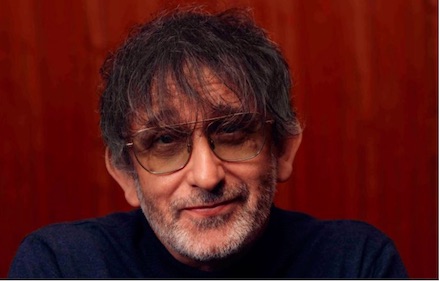
Ian Broudie
On the surface, it’s difficult to believe that 13 long years have crept by since brainy producer/multi-instrumentalist Ian Broudie released Four Winds, his last picture-perfect pop album as The Lightning Seeds, a dormant period the Brit is finally breaking with the shimmering new See You in the Stars, out last month. And when he stops to consider it, he’s a tad aghast himself. “But time just flies, doesn’t it?” he notes, chortling. “But after I made the album Tilt, about 20 years ago, I stopped for a while, and then I made a solo album, and then I was going to do another one.” The songs he’d written then were too personal and specific to make a traditional dreamy and nebulous band effort, a la its definitive Cloudcuckooland debut in 1990. But label execs pushed for Lightning Seeds material, so he compromised, issued **Four Winds under that more recognizable banner, and instantly regretted it. “So I definitely didn’t want to make another Lightning Seeds album until I had some songs — if ever — that felt like they were Lightning Seeds songs. Uhh, whatever that **is.”
What was so unusual and awkward about the Four Winds tracks? “I felt like it was just sad; it was just like a sad feeling,” the composer appraises in hindsight. “And I think Lightning Seeds is inherently positive, and although some of the words are sad, some of my sadder songs can be really elating, like a vitamin C tablet. Then a couple of years ago, I wrote some new tunes, and I felt like they did fit into that world.” The wait was worth it. Only one **Stars number could be considered a bit lyrically glum — the conversely jangling title track, an elegy to a good friend of the singer’s that passed away during lockdown But the rest — from the foot-tapping “Losing You” opener through an orchestral “Sun Shine,” an organ-powered “Fit For Purpose,” the echoey chimer “Green Eyes,” and a swaying, aptly-named pop ditty dubbed “Great to Be Alive” — it’s a feel-good recording, from top to bottom, and a perfect beckoning sonic beacon to turn to as our world grows increasingly dark and dismal. Broudie paused to illuminate his own technique for an informative half hour….
IE: So See You in the Stars kind of declared its arrival to you, then?
IAN BROUDIE: It’s an abstract idea, you know — will I write an album? Will I write a song? Because you’re not emotionally attached to it. But as soon as they become songs that you’ve written, and you think, “Oh, I like these! I’d like people to hear them!” Well, then you start really thinking, “Well, if I want people to hear them, I need to record them, and then I’ll need to record some more.” So that was the beginning of me recording this album. That was three years ago when it started, but I did a lot of it during the pandemic.
IE: Who were you in quarantine with?
IB: For a lot of it, I was on my own. But in the beginning of it, my son Riley, his mom, lives in Spain, in Barcelona — a very beautiful city with a lovely climate. But when it actually hit, we were just starting to do a few gigs, and I was in Glasgow, and I traveled home. And I don’t know if it was the same in America, but over here, that bit when it hit was seriously scary — it felt like one of those zombie films where society totally breaks down, and you’re like, “What is going to happen?” So I was worried about her being in Barcelona, so I phoned her and said, “Why don’t you come and stay with me? It’ll probably only be a couple of weeks, you know?” So she managed to get back to the UK, and then she ended up staying with me for a couple of months, so it was good because neither of us were on our own. And then she went back to Barcelona, so the rest of the time, I was pretty much on my own, which I didn’t mind. It really focused me. There was something that I liked about it.
IE: How would your pandemic days proceed? Get up, have coffee, then what?
IB: I’d get up at different times. I was very anxious, actually, so I was waking up a lot in the night. But then, I’m a bit of a night owl — I always have been. But I became a bit more like that, and a lot of the time when I’m recording at home, I’ll tend to do that at night, as well. So there was a lot of that going on — a lot of waking up in the night, wandering up to the studio a little bit, and writing and finishing off some tunes. But I really didn’t want it to sound like an album that was done in the pandemic, and I hope it doesn’t. I think some of the subject matter is quite anxious, but I wanted it to be very positive. And I was onto that idea when the pandemic hit, so I tried not to get deflected from it in any way.
IE: At any point over the past 13 years, did you ever consider quitting and just doing production?
IB: You know what? I was enjoying the life of a troubadour, so I was just playing live, and I wasn’t even thinking about doing anything more. I used to produce a lot of bands, but I’d stopped doing that, and I was just enjoying playing, really, playing in a field somewhere at a summer festival in Europe or the UK, and I loved it. Because I’d always been a studio guy and a reluctant performer, really, and I had a lot of stage fright early on. But now I think I got over that, so I felt like, “If I write some new songs, great. And if I don’t? That’s okay.” And when I say ‘troubadour,’ I don’t mean I turn up on my own and play on my own — I have a band, so there’s five of us. But I just mean the life of a troubadour. I mean, I wish I was a wandering minstrel because it’s probably much less romantic than that. But I was just someone who plays, performs, and isn’t too worried about making another record, really. I just felt like, if it happened, it’d happen, but I wasn’t gonna force it.
IE: What denotes a perfect pop song to you when you’re writing it? Are there little boxes you have to tick off?
IB: Well, I hate the word` ‘pop song.’ And I know people associate it with me a lot, but it’s a phrase I really hate. This idea that I’m searching for perfection? I do think that the pursuit of excellence is not attempting to be perfect. And I am very one-track-minded, and I do overthink, and I’m a little OCD in my life, and that translates into my music, so I want everything to feel right and be in the right places and feel great. But ‘pop’ in the Warhol sense — where it’s an explosion of a certain moment, and certain emotions and sounds are captured, framed, and then you hang it on the wall, and it’s a recording — well, that’s how I view it. And I do want to make them great, but this idea of perfection? I don’t know what perfection is, or would be, or why you’d want it, you know?
IE: And every year that goes by, many more songs are set in copyright stone. How on Earth do you pen a new one that nobody has ever heard before?
IB: Well, you see, it’s the mixture of things. I don’t really view music like that — I view music as a concoction of familiar things, and it’s the blend of those familiar things that create its unique quality and its originality. To me, it’s like; you could say the same thing with, How can someone write a book when there’s only 26 letters and everyone’s used all the words? I feel the same way about music — it’s the musicians, the feel of those musicians, the type of instruments that are put together. I suppose it’s different because I’m talking about making a record, and the way I work, the song is created at the same time as the record, so it’s the same process. I’m writing and recording it and changing it, so it’s like a witch’s brew, and plus, every bit of it is familiar. And it needs to be, in a way, because to trigger an emotion, it probably needs to be something that triggers a memory. So I think music is magical, and it affects us in a certain strange way — it gets into your ear, but it gets somewhere else, as well. At the most emotional moments of your life, if you’re at a sports game or a wedding or just singing, music is what becomes just the most important focus in your head. Or that’s how it often is for me, and for a lot of other people, I would say.
IE: Over the years, some of the best songwriters have all told me essentially that if you have your antennae up on a clear night, a lot of times the song will beam down to you from the Universe, virtually pre-written.
IB: It’s quite a funny moment, isn’t it, with anything creative? There’s that moment before when it doesn’t exist and the moment later when it does exist. And you think, “Where did that come from? It wasn’t here a minute ago, and now it’s here.” So you do get that feeling of it coming from somewhere. But creativity is a weird thing — it comes and goes. It’s like trying to fall asleep, isn’t it? Sometimes you can; sometimes you can’t. But life is a bit like that, isn’t it? One thing leads to another, and the world feels very small sometimes, as well. So I’m a big believer in, well, just going with the flow, really. And I think sometimes in my life, I’ve probably tried to control things a little bit too much, in a way, and then, later on, I’ve felt like, “You know what? Let’s just let things happen. And if they don’t? They don’t. But hopefully, they will.
-Tom Lanham
Category: Featured, Hello My Name Is