Spins: Frank Zappa • Halloween ’78: Live at the Palladium, NY Super Deluxe
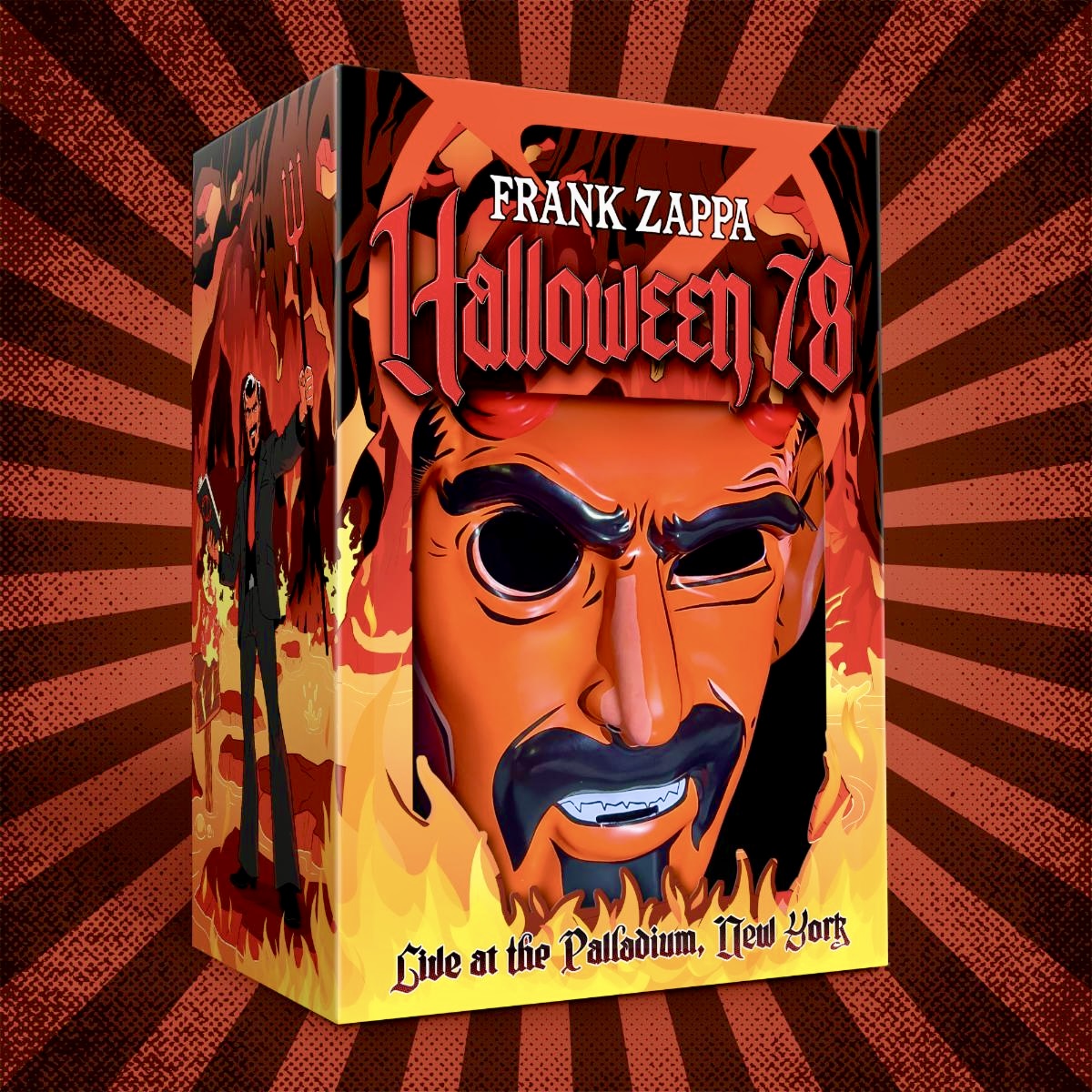
Halloween ’78: Live at the Palladium, NY Super Deluxe
(UMe/Zappa)
Spooky! Scary! I am, of course, referring to the compositional skill and dazzling technical chops on display by Frank Zappa and his top-flight band on the Halloween night of 1978 in New York City.
This is the fourth Super Deluxe costume box from Zappa’s beloved Halloween shows. The first set documented concerts from 1977. The box included a mask and vinyl suit to go trick-or-treating as Zappa circa Baby Snakes. Next came the 1973 box commemorating shows at Chicago’s Auditorium Theatre with a “Frankenzappa” costume. The 1981 concerts included a bloodthirsty Count Frankula set. The current set features a diabolical Frank mask complete with red horns and a light-up pitchfork. A “grimoire” book includes artwork, Lynn Goldsmith’s concert photos, Joe Travers’ liner notes, and five CDs containing well beyond five hours of live concert audio.
The campy kitsch appeal of another kooky Zappa mask notwithstanding, the main reason to get this box is the stunning and adventurous music on these five CDs.
The set includes, for the first time, the complete audio from Zappa’s Halloween 1978 concert at New York’s Palladium. The 36-song set list stretches to nearly four hours. Excerpts have been released over the years, but fans have long desired an official full-concert release from Zappa’s master tapes. “This is it! This is the big one,” says Zappa when welcoming the crowd to the last of his six holiday shows at the venue.
After appearing on Saturday Night Live the prior weekend, Zappa returned to his regular haunt at the Palladium this run of concerts. The Fall ’78 tour was the first with the rhythm section of bassist Arthur Barrow and drummer Vinnie Colaiuta. Barrow’s fretted bass work was supplemented by fretless bassist Patrick O’Hearn. The two bassists complemented each other with counterpoint and harmony on songs including set opener “Ancient Armaments.”
The expansive set list reaches all the way back to the Mothers of Invention debut Freak Out! for “Go Cry on Somebody Else’s Shoulder.” 1974’s Apostrophe (‘) gets the deepest dive, with spirited versions of “Don’t Eat the Yellow Snow,” “Nanook Rubs It,” “St. Alfonzo’s Pancake Breakfast,” and “Father O’Blivion” performed in suite sequence from side one of the album.
Sheik Yerbouti and Joe’s Garage: Acts II & III would arrive in 1979, and a handful of Zappa’s most recognized pieces from these milestone releases are forecasted during the Halloween concert. “Bobby Brown” and “Dancin’ Fool” made regular appearances in Zappa set lists for the remainder of his career, and “City of Tiny Lites” became the calling card of the year spent with Adrian Belew in the lineup. Belew departed the Zappa band to join David Bowie mid-year in 1978. “Lites” is sung with ample character by returning guitarist Denny Walley. “Watermelon in Easter Hay” featuring the tragic character Joe’s “last imaginary guitar solo” is often considered to be Zappa’s masterpiece in its album version, and the expanded 13-minute version performed here is beautifully realized. Indian violinist L. Shankar answer’s Zappa’s languid guitar with an intoxicating solo before the pair join their instruments in duet.
Zappa interacts with a crowd characterized as a collection of “New York’s finest crazy persons,” accepting gifts and taking questions from fans near the front. One asks, “If the cops come on, can you dance with them again?” “Why, of course,” Zappa answers. Zappa says that the band had rehearsed some older songs during the afternoon soundcheck but would play the unrehearsed “Stink-Foot” because he promised someone that he would. The crowd roars as Zappa counts in the bluesy favorite.
The seasoned interaction of Zappa’s fearless band allow Zappa to call other songs as off-the-cuff audibles, including a white-hot blast through “Peaches En Regalia.” Keyboardists Peter Wolf and Tommy Mars play interlocking and intertwining jazz-influenced figures. Zappa sings One Size Fits All waltz “Sofa #2? in a combination of English and effusive German. ”Ich bin hier, und du bist mein Sofa,” he sings. Translation: “I am here, and you are my sofa.” Deep stuff. The as-yet-unreleased “Packard Goose,” out of context from Joe’s Garage, allows Zappa to take his shots at music journalists. “All them rock ‘n’ roll writers is the worst kind of sleaze,” he sings.
Walley’s slide guitar bristles during the loping blues of “Suicide Chump.” “The Little House I Used to Live In” is as dissonant and paradoxically beautiful as ever, with an extended improvisational stretch that allows Zappa to feature everyone in the band, including a solo for Colaiuta. Dubbed “The Bionic Parrot” by Zappa due to his Halloween attire, guest Shankar is highlighted a final time on the set-closing fusion-based foray “Black Napkins/The Deathless Horsie.”
Surprise guests during the night include guitarist Warren Cuccurullo, called forward to tell the lascivious “Story of Ms. X” with traces of the Kinks’ “Lola” and The Crying Game. The low funk of “Conehead,” naturally, connects to Saturday Night Live. Zappa’s appearance as guest host on the October 21, 1978 episode of SNL and participation in the night’s Coneheads sketch went infamously south and saw him blacklisted, but Conehead comedienne Laraine Newman is a supportive presence during the Halloween concert. The guests enhance the immersive evening’s sense of spontaneity and improvisational exploration.
The remaining two discs include the first show of the six-concert run on October 27, 1978. Zappa’s obsessive and studious fans have debated and discussed these performances for many years. This first show has been considered the weakest of the batch but it becomes apparent that the idea of “weak” is relative. Fans of progressive rock, avant garde composition, jam bands, and jazz fusion will be spellbound by the musicianship and improvisational risk-taking.
The full “Dance Contest” that appears as an excerpt on 1981 release Tinseltown Rebellion appears here in its full chaotic splendor. A number of fans in various states of likely chemical impairment are brought onto the stage and given the impossible task of couples-dancing to the frenetic “The Black Page.”
“Easy Meat” features a high-octane guitar solo from Zappa. Percussionist Ed Mann and violinist Shankar step forward on an epic, nearly 16-minute “A Pound for a Brown on the Bus” with delicious leads that set up a stunning three-and-a-half minute Zappa solo. Wolf and Mars again trade airspace and improvise duets with dizzying keyboard work. Barrow and O’Hearn demonstrate how captivating the unusual deployment of two bass guitars can be. Mann’s mallet percussion provides essential texture to Zappa’s intricate compositions throughout the set.
The October 31 show is widely considered to be a jewel among any show from Zappa’s concert archive, making this set essential listening for any budding Zappaphile. Happy Zappaween! (zappa.com)
– Jeff Elbel
October 31 show: 10 of 10
October 27 early show: 7 of 10