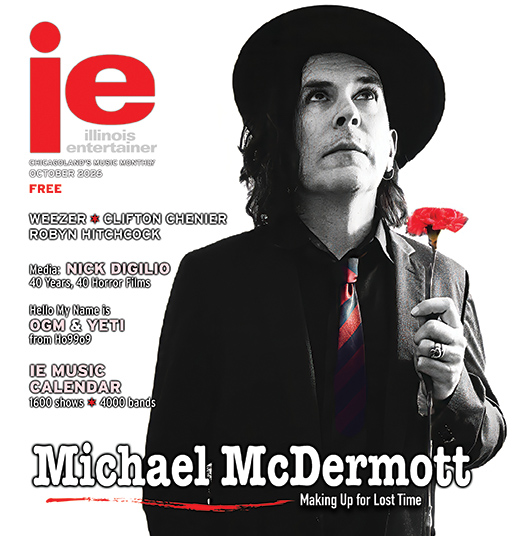
Cover Story: Queensrÿche • Prog Metal Titans Return to Arcada Theatre
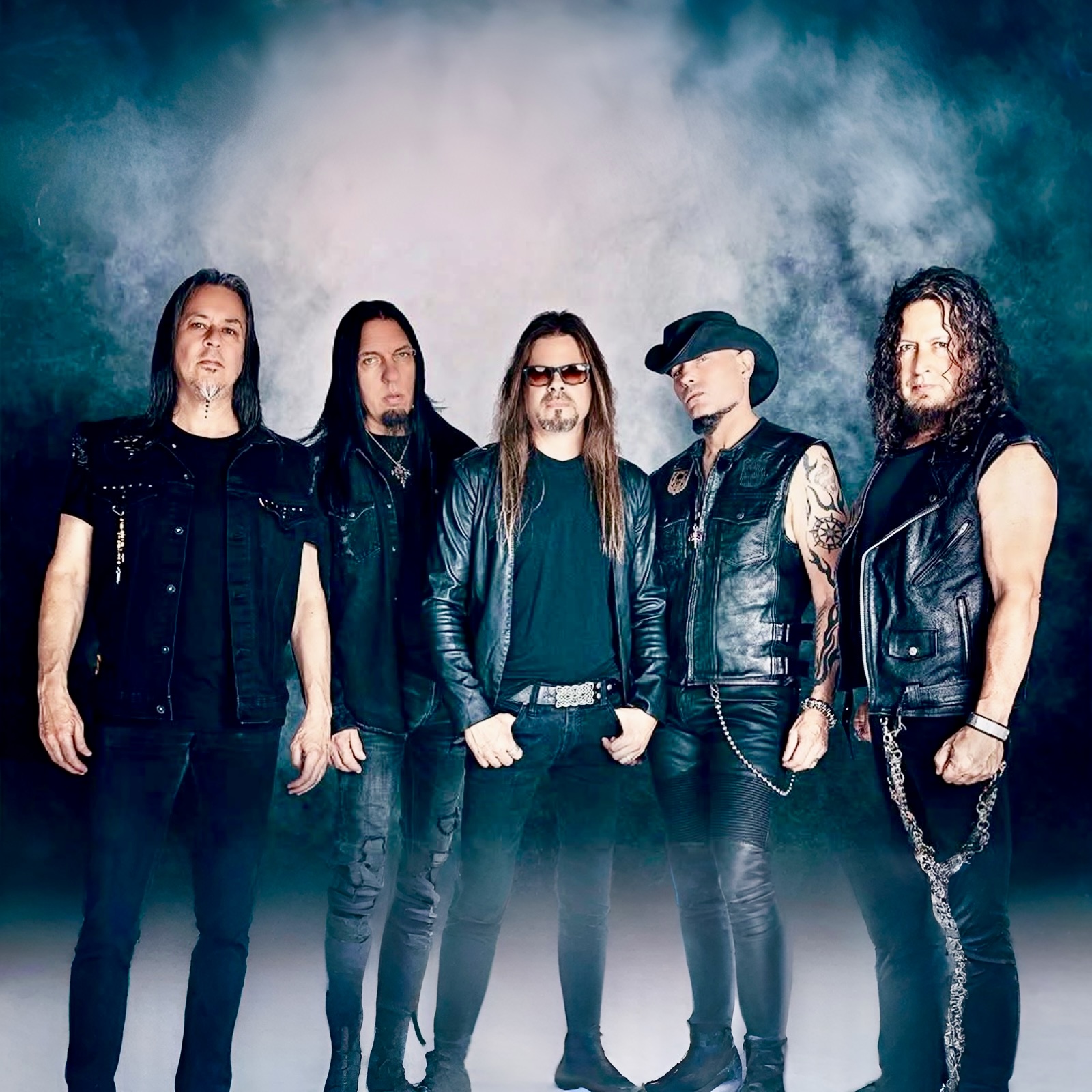
Queensrÿche
Power/prog metal innovators Queensrÿche are among the first bands to capture this style of metal before most of their peers eventually caught on.
Queensrÿche’s 1983 self-titled EP remains one of metal’s most significant EPs ever recorded and still holds up well 43 years later. Throughout the late eighties and early nineties, Queensrÿche were unstoppable, largely due to the massive success of the iconic albums 1988’s Operation: Mindcrime and 1990’s **Empire. Memorable tracks such as “Best I Can,” “Revolution Calling,” “I Don’t Believe in Love,” “Jet City Woman,” “Silent Lucidity,” and “Empire” are exceptional calling cards to Queensrÿche’s success at that time. However, the rest of the ’90s through the 2000s weren’t the most decorated period for metal in general, and as a result, Queensrÿche segued through several musical stages.
IN THE BEGINNING
Formed in Bellevue, Washington in 1980 as Cross+Fire by guitarist Michael Wilton and drummer Scott Rockenfield, the band was renamed The Mob after the addition of guitarist Chris DeGarmo and bassist Eddie Jackson. Queensrÿche were officially christened in 1982 after welcoming vocalist Geoff Tate into the band. As teenagers in the early eighties, Wilton and DeGarmo formed a mutual musical bond. At the time in Seattle, Top 40 ruled the airwaves, and the two friends were having none of it. Frequent visits to their local record store led them to the import section, where they checked out bands from Europe and the UK playing hard rock and metal. Hearing all those duo guitar parts inspired Wilton to create his music with a unique twist.
As major frontrunners of the early US power metal and proto-prog metal genres, Queensrÿche were in good company with bands such as Savatage, Vicious Rumors, Jag Panzer, Fates Warning, and of course, Metal Church—who were across the bay in Seattle during that same time period.
“We were teenagers, and it was just about networking and sharing with friends and doing garage bands,” Wilton explains during a recent phone interview. “We were very young. We were just concentrating on writing our own music and getting our own identity as far as the direction the band had at that time. What we were listening to was the British [Metal] invasion, that whole UK invasion with bands such as Judas Priest and Iron Maiden, compared to what was local, which was Top 40. So, that’s the direction we started in.”
Queensrÿche’s 1982 four-track demo was originally recorded when the group was still known as The Mob and was re-released by EMI for the official self-titled EP the following year. The recording remains one of metal’s most cherished EPs ever unleashed. In fact, the opening track “Queen of the Reich,” the first song the band ever wrote together, remains in the band’s live set today. In 1984, the band’s debut full-length album, The Warning, set Queensrÿche on a different musical path. Consisting of darker songs, more mid-paced rhythms, dynamic guitar riffs, and detailed song structures, Queensrÿche’s evolution was just beginning. Tracks “Take Hold of the Flame,” “Child of Fire,” and “Roads to Madness” became early concert setlist favorites and soon became standout gems from the album. Although the band was still finding its footing within the US power metal and progressive metal genres, this album served as an innovative precursor of things yet to come. “When we started that ’83 tour, we had basically “Take Hold of the Flame” and other songs that we were implementing into our setlist,” Wilton remembers. “So that was kind of the way we did it before we actually recorded the album. We just believed in what we were fighting for and took advantage of our opportunities. The future of the band was unknown, but we just kept persevering and got a lot of breaks, and you’ve just got to learn to take advantage of it.”
Queensrÿche’s sophomore release, 1986’s Rage for Order, which recently celebrated its 40th anniversary, was sandwiched in between the band’s innovative debut and its extraordinary following album, 1988’s Operation: Mindcrime. The band’s decision to once again change its identity on **Rage for Order*—in both its image and overall musical sonority—took on a more futuristic, dystopian vibe. “Well, you have to realize that when we decided to record albums, we wanted each album to be 180 degrees different from the previous one,” Wilton confesses. “We didn’t want to be known as the band that just copied our previous album. Rage for Order was just an evolution; a chance to think outside of the box. And that’s what we did.”
A NEW ERA
Post-Promised Land releases from 1997 to 2011 were an experimental period for the band, thus dividing Queensrÿche’s fan base. Several albums during this time period delved into alternative, hard rock, grunge, and commercial rock styles, while forgoing its original metal influences. Plus, DeGarmo’s exit from the band in 1997, as well as the failed sequel Operation: Mindcrime II in 2006, and the theatrical cabaret fiasco, didn’t help Queensrÿche’s status, either.
However, performing two shows in 2012 under the short-lived name of Rising West, Wilton, Jackson, and Rockenfield—joined by live guitarist Parker Lundgren and Crimson Glory singer Todd LaTorre—played invigorated sets of early-era Queensrÿche songs to enthusiastic crowds. “We were at a point in our career that we wanted to have fun playing the songs from the EP and *The Warning* that weren’t in the set list anymore,” Wilton reflects. “We just knew the fans were craving that; the energy of the older albums. So, it was more of what we wanted to play as set lists and just took a chance, and both shows sold out.” Basking in the success of these two shows, the rest of the band fired Tate and its management, which happened to be Tate’s wife. Tate retaliated with a lawsuit against Rockenfield, Wilton, and Jackson over the band name, which ended with the latter as the official winners.
With the litigation behind them, the new chapter of Queensrÿche allowed the band to recapture its early-era metal-oriented essence on its 2013 self-titled release with its new vocalist.
Ushering in LaTorre was ultimately what the band needed, and Wilton knew exactly what he was looking for. The musicianship and songwriting only prove that the band has never sounded better after LaTorre took the helm. Joining Wilton, Jackson, and LaTorre in the current Queensrÿche lineup are guitarist Mike Stone—his second stint with the band—and drummer Casey Grillo—who joined the band in 2020. The new additions have made a significant impact by contributing to the writing of their latest album. According to Wilton, the two almost immediately understood the band’s musical DNA. “The band is very strong now with the personnel in it, and the fans realize it’s all about the songs. It’s not about one individual or anything like that. So, it’s a representation of past albums alongside our new music. That’s basically how we look at it.” On Queensrÿche’s 16th studio album, 2022’s Digital Noise Alliance (DNA)—its fourth post-Tate release—the album’s 11 tracks echo the classic early-era Queensrÿche sound with a sharp, modern edge. From the impressive opening track “In Extremis,” to the haunting “Behind the Walls,” to the gorgeous Pink Floyd-esque intro of semi-ballad “Forest,” to the epic and upbeat album closer “Tormentum,” the band continues the path it displayed on its three previous LaTorre-led albums by delivering the band’s early-era essence that longtime fans clamor for.
Digital Noise Alliance is the perfect balance of melody, emotion and progression, proving that this current formation of Queensrÿche has latched onto a winning formula. “Yeah, I think the progression of dynamics of the band, the true aspect of a band, is what I wanted,” Wilton admits. “Everybody contributes and writes, and that’s kind of what makes it fun. That’s kind of the approach we took for *Digital Noise Alliance*. Everybody was involved in the process, and I think it worked. The support and the overwhelming success and how things are right now is just something that’s building, and we’re just really proud of it.”
FUTURE TENSE
Queensrÿche recently returned from Europe with a slate of festival appearances and some headlining shows. Beginning its US tour in early July, the band will be on the road till late November before returning to Europe in December. With each new Queensrÿche tour, a new stage show and a new setlist must be decided. “The stage production just evolves with each tour,” Wilton admits. “And as far as setlists, Queensrÿche has a Chinese menu list of songs, so it’s always a task to try and agree on the set list. But it’s a balance, really. We know what our hardcore fans want to hear and we know what the casual fans want to hear. We just have to build a set that we think that everybody will love.”
This current tour involves a date at the historic Arcada Theatre in St. Charles on Sept. 3, a venue Queensrÿche is very familiar with. Throughout its long career, the band has played in Chicagoland countless times, and it’s always one of the band’s favorite places to play in the US. As an added bonus, Wilton’s daughter lives in the city, and he gets to spend some quality time with her.
Making time for family and playing in a celebrated musical city are top highlights on Wilton’s list of his favorite things about playing in Chicago. “We’ve played many theaters, and this one’s a smaller one, but it’s kept up really well, and it’s in a really cool part of town,” Wilton enthuses. “So, it’s a lot of fun to go there. We get offers to play there, and it’s great because we’ve played many different venues in Illinois, so it’s kind of like we get to pick and choose which ones to play. Sometimes we say, ‘Okay, we played this one venue last time, so let’s play House of Blues next time, or let’s play somewhere else,’ you know? So, we’re just constantly touring and visiting venues. And it comes to a point where we’re doing the Arcada again.”
It’s been four years since Digital Noise Alliance was released, leaving fans eager to see what the band has up its sleeve on a new Queensrÿche album. According to Wilton, the band has been working on new material off and on for the past couple of years now. Although Wilton can’t give a tentative release date, he assures me that they have been giving the new songs some detailed attention. “We’re probably about halfway done with the new album,” Wilton admits. “We have some amazing demos that we’ve written, and we’re just waiting for some pockets of time to finish the songs and get it mixed and produced. And then we’ll see. I can’t give an answer to when it’ll be finished because we don’t know. We’re constantly working and touring, and offers are coming up, and it’s kind of hard to get some downtime. You can get into that mode of creativity for writing and recording an album. So, it’s definitely in the works, and we’re really happy with what we’ve done so far.”
After four-plus decades, the band has never sounded better. As the band members get older, the more they want to continue performing at the top of their game. “As we get older, it’s a little harder with traveling; being in buses, airports, etc.,” Wilton explains. “It’s a bit hectic dealing with everything. Eddie and I are the two OGs of the band, but everybody’s getting older. As for the number of shows we do, it just depends on the situation. For the past 10 years, we’ve been just doing over a hundred shows a year. It definitely takes its toll on the body. I love what I do, so I have to take care of myself and make sure I don’t burn out on what I’m doing and just constantly keep it fresh. We’re inspired by all the traveling, the different types of venues, and the people we meet all over the world. It’s something we’ve been doing for a long time, and I still love doing it.”
Appearing 9/3 at Arcada Theatre
– Kelley Simms
Category: Cover Story, Featured, Monthly