Cover Story: Wild Belle
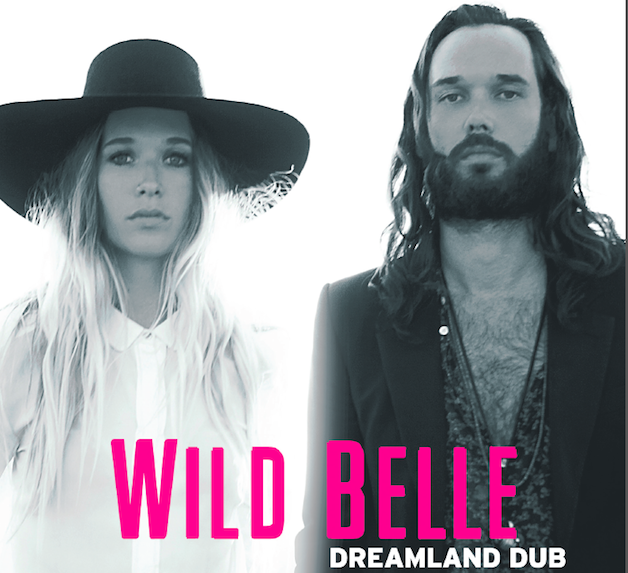
Wild Belle: Natalie and Elliot Bergman
If idle hands are indeed the devil’s workshop, as the old adage goes, then Wild Belle – the brother/sister duo (and Barrington natives) of Elliot and Natalie Bergman – has gotten Satan so far behind them via a flurry of creative activity, Old Scratch doesn’t stand a snowball’s chance in hell of ever diverting their attention.
For starters, the band has just issued Dreamland, the intoxicating, sonically-adventurous followup to its tropical-flavored Isles debut from 2013. With Elliot producing or co-producing almost every track – and playing a veritable battery of instruments, including piano, synthesizers, baritone saxophone, electric kalimba, plus steel (and programmed) drums – all to buttress his sibling’s smoky, vulpine vocals, it’s a great stylistic leap forward. Or, as Elliot puts it, “I think this is a much more grown-up album – it goes a bit deeper, and it gets a bit darker, and it reflects all the challenges we’ve had to deal with that have come into our lives. So it’s taken a while, and we’ve been working really hard. So you can probably hear that in the music.” With all the other projects occupying the Bergmans’ time, though, it’s a wonder the record got completed at all.
And it all spirals outward from the Wild Belle origin story, which is as curious as any comic book superhero’s. Elliot studied gamelan at the University of Michigan, and even joined a full gamelan ensemble, before delving into jazz and African percussion courses. A full eight years older than his sis, he launched an Afrobeat outfit called NOMO, while Natalie gradually began tracking her nascent folk songs on GarageBand. It was only when she left her teens that her brother not only noticed, but decided to team up with her to compose their own serpentine brand of dub-and-reggae-respectful pop, which led to slinky standards like “Blackslider” and the lissome “Keep You,” and an ensuing label bidding war that was won by Columbia. But meanwhile, Elliot was also running a quiet business on the side, making kalimbas, which often paid his rent – he had the necessary soldering skills courtesy of an old straight job in metalwork. His signature Wild Belle kalimbas gained such technical renown, Paul Simon’s office requested a personal demonstration from their creator; only his bass player showed up, sadly, not Simon himself.
A nice moonlighting gig. But the Bergmans now are juggling many more. Jumping headlong into fine art, Elliot has produced so many abstract, meticulously-detailed pen-and-ink drawings – plus paintings – he was just given his own hometown exhibition, called Praxis, at the Andrew Rafacz Gallery. His sketches, he says, employ actual India ink, often feature non-traditional objects as stamps, are variations on monotypes, and are usually on paper. “But I use all sorts of various tools, like wheels and tires and stencils – whatever I find that has an interesting shape or texture,” he explains. “So there’s a mechanical process that goes into all of that. I’m not a trained artist, but I have hundreds of these works on paper, these experimentations, where I’m trying to develop this language with shapes, lines, and repetition.” Which is why he was first drawn to the gamelan – the dogmatic repetition its playing necessitated.
But Praxis offers another glimpse into this Renaissance man’s world – several of his hand-cast bronze bells, initialed MB, which require an arcane, vintage technique. The fascination started years ago, when his grandmother handed down a collection of Swiss cowbells before she passed; Now he maintains a sprawling ‘bell wall,’ which keeps expanding as he picks up new tintinabulating treasures as Wild Belle tours the world. Drawing, he can do anywhere. But the bell stuff is not something you can take on the road – it’s more relegated to my basement,” he says. “And it’s rough – it’s a lot of work. You start in wax and you make forms out of wax, and then you get a ceramic paste and you make a shell, and that becomes the mold. Then you melt the wax out, and then you pour the molten bronze in. And once that happens, you break your shell, and then you’ve got a lot of metalwork to do from there. It’s an insanely labor-intensive process.
“But it’s so much fun,” he adds; the video for early anti-violence *Dreamland* single “Throw Down Your Guns” features firearms being smelted into bells, too. “It’s this ancient method that gets you involved both visually and musically, because the sound of the bells is equally important.” He pauses, contemplating the craft. “The bells, for me, have a bit of mystery. It almost doesn’t feel like something I did, using these elemental things like fire and metal to make these beautiful sounds. There’s so much more in it than anything you could ever figure out on your own.” Naturally, he sighs, there have been a few flameouts at the foundry. “I’ve burned myself a few times,” he admits. “Not like hospitalized-bad, but really sore for a few days. And I dropped an anvil on my foot a couple of months ago, so you’re always kind of hurting yourself. And Natalie winds up cutting herself, too. Not on purpose, of course,” he tacks on, hastily. “But those X-actos she uses can be dangerous weapons, as well.”
That’s right. Natalie is an artist in her own right, whose avenue of expression has become elaborate, Max Ernst-stylish collage works. And she has gotten so deeply involved in the craft, she takes it on the road with her – the entire first bench of the Wild Belle tour bus, in fact, is reserved for her cut-and-paste pieces, and a physically dangerous place for anyone else to sit, given those scattered X-acto blades. “But she’s got her cuttings out, and it’s like her private art studio,” assesses her brother. “And now we have an expanded band, with two other female vocalists, so everybody in the bus is sitting there, watching her carefully wield this knife as we cruise down I-70. So she literally has this full-scale art production running out of half of our van. There are seriously X-actos everywhere.”
And sis is a keen-eyed perfectionist. “I just did a collage a few minutes ago, and I’m already resenting it,” she confesses, clinically. “”I’m already not loving what I did. I cut out a bunch of lips, but then I wanted to put the lips on something because they didn’t really have a purpose at all. So I took a photo of this guy who’s leaning on a car, leaning on an old Dodge, and I put dollar signs on his eyes. And he’s got a big brass ring on, and he’s carrying a knife, and now he has lips all around his head.” She sighs. “And I thought it made sense for a little bit, but now that I’m really looking at it? It’s *not* my favorite collage.”
The raw materials for Natalie Bergman’s work are not as primal as her brother’s. “I use a lot of magazines,” she explains. “Magazines that pre-date the 1980s, or I’ll just use whatever’s available to me. But my grandma gave me her collection of National Geographics – we loaded up her van with *National Geographics about three years ago, so now I’ve got hundreds of those, from the ‘50s up until the 1980s, and that’s a nice source to go back to. But I also like motorcycle magazines – I like bikes, I like choppers, I like naked women, I like sad eyes, I like colors, I like cats. I like cats from countries that I’ve never been to, and I like wardrobe on people that I’ve never really worn before. I just like to mix cultures up onto a page, and make it a really unfamiliar place. It’s an extension of what’s going in my brain, and it’s purely for aesthetic pleasure. I just like cutting things up and creating a world where nobody’s ever been before.”
Bergman senses a theme to her current collages. Initially, it was automobiles, since that’s what she sees every day outside the tour bus window. But lately it’s gotten more punk rock, she reckons – Situationist chaos with little color, just streamlined black and white. “It feels like it’s kind of a lost art,” she says. Elliot sees a much more sweeping panorama, however. “All of this ties into the new record,” he declares. “Because we do travel a lot, and we see all these interesting parts of America that are broken down and in need of help. So Dreamland is about thinking, ‘What are we doing here? We have all these resources and all these systems in place that are just crumbling.’ And the more you travel around the country, the more you see all these cars on the road, and the more you understand what it means to be American. So we’re making music amid all that, and we’re discovering how we can grow it and develop it against that backdrop. So it all seems to be connected – you find yourself creating an entire world of sound and vision that’s like a shock to the system.”
That’s how most of the Bergmans’ idols did it before them. Like Sun Ra, Fela Kuti, and – naturally – David Bowie, whose passing this January hit them unexpectedly hard. “Because what they were presenting involved art, it involved music, it involved all of these different things,” Elliot elaborates. “It’s a complete vision, so you can’t really separate one component from the other. And I think that’s a high-water mark for an artist – to capture the imagination with not only your music, but to realize that there are all these other possibilities out there, and to use them.”
So it makes perfect sense that Dreamland – which has been finished for a full year and awaiting release – was recorded piecemeal, in such waystations as Nashville, Chicago, Toronto, New York, and Wild Belle’s beloved Jamaica, where they just spent time with director/multimedia artist Philippa Price filming the dance-ebullient clip for new Diplo-assisted single “Our Love Will Survive.” Elliot’s co-producer was mainly Doc McKinney, but other collaborators punched in, too, like Pat Carney (the undulating, dub-echoed opener “Mississippi River”) and Dave Sitek (the sinister, cowbell-tinking stomper “Giving Up On You,” in which Natalie snarls menacingly to a creepy ex, “I’m not a criminal/ But after all that you put me through/ I wouldn’t mind killing you”; she turns conversely optimistic and sunny on “Our Love Will Survive”). But essentially, Wild Belle slips into its trademark island groove – underscored by Natalie’s unusually dark lyrics – interloping sax-punctuated hip-shakers like “Coyotes,” “Cannonball,” “Losing You,” and the jittery, handclap-syncopated “Throw Down Your Guns,” a statement as much about our NRA-empowered weaponized culture as it is about Natalie’s own personal demons she had to shoot down in order to write its flower-power-retro message.
Natalie Bergman won’t gauge the depressing depths into which she sank while making Dreamland. But at one point, she was so disconnected from everyday life she became disconnected – from her electricity in the middle of a Chicago winter, when she forgot to pay her bill (she scrambled to buy a lengthy extension cord from Home Depot, which she plugged into a socket at the home of a friendly neighbor, hip-hop musician Nigel Holt). “There was some personal turmoil going on in my life,” she tentatively allows. “There were many things. I’m an emotional human, I’m very sensitive. So oftentimes, I just experience things in a very serious way. So I would say that….that I froze. Yes, I froze for a second, in relationships with men, relationships with our label, relationships with family. That shit ain’t easy. I had a lot on my shoulders, and letting people down isn’t really fun to do. But then a lot of people have let me down, too….” She catches herself before she delves too deeply into her diary. “I dunno….I…I’m just rambling here.”
But the vocalist will cop to lyrically combining her own unrest with that of society around her in “Guns.” The segue works beautifully. “Because what’s going on in the universe hits very close to home in Chicago,” she says. “And because there’s so much violence and inequality, I think the song has taken on a different voice, a voice that’s actually deeper than my own voice. And through the music, we’ve joined arms with those who have lost their voice, or don’t have one. That’s why we wanted to incorporate dance into this – and all of our videos. We wanted the “Throw Down Your Guns” video to be about the celebration of life. We want to bring people together, not tear them apart from each other. And naturally, we want to destroy guns.”
Additionally, Wild Belle found time pen “Be Together” witho and DJEMBA DJEMBA for the last Major Lazer album, Peace Is the Mission. And peace is, indeed, their ultimate goal. A peace that seems to wash over both Bergmans whenever they return to Jamaica. Where they moved into yet another artistic medium last Christmas, when they were invited to the home of Island Records legend Chris Blackwell for a very special appearance.
“It was one of our most high-pressure gigs of all time,” Elliot shudders. “We were DJ’s for his New Year’s Eve party! And when we got asked to do that, we went on a record-shopping spree for the next four months, just trying to make sure we had all our bases covered. You could only DJ vinyl there, so we wanted to have actual 45s of all the stuff we wanted to play. But it went really well, and they’ve already asked us to come back next New Year’s. Plus, we got to meet Grace Jones, which was amazing. And Chris Blackwell was this really cool guy, an absolute legend who’s there hanging out at his place every day, playing backgammon and telling these incredible stories.”
But in these desperate climate-changed times, can a song, a collage, a painting, even a resonant, carefully-cast bell actually change things? Elliot responds in a positive-thinking heartbeat. “That’s the whole thing,” he concludes. “That’s the belief that you have to have, in order to keep going. Because there aren’t too many other affirmations that you’re going to get, so you have to hope that there’s an audience that can hear what you’re trying to say, and that it can impact them in some way. And that’s the thing about Bowie – why are people mourning so much for somebody that they didn’t even know?
“It’s because Bowie helped people to know and understand themselves better through his art. So I think that’s what music can be – it can help you understand your place, it can help you see another reality that might be different or better than your own, it can bring people together. It can make you feel something. And that, for Natalie and I, is really important.”
-Tom Lanham
Appearing at Mamby on the Beach, Chicago – July 2 & 3.