Spins: The Rolling Stones • Black and Blue Super Deluxe LP box
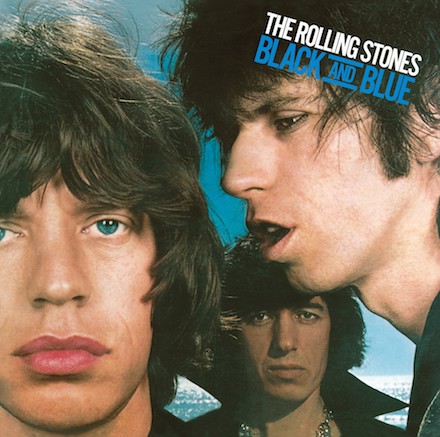
The Rolling Stones
Black and Blue Super Deluxe LP box
(Interscope/UMe)
Featuring Billboard Hot 100 #10 ballad “Fool to Cry,” 1976 album Black and Blue found the World’s Greatest Rock and Roll Band continuing a transition away from its reliable foundation of blues and roots rock that it undertook with 1974’s It’s Only Rock ‘n’ Roll and finding its way toward the urbane and zeitgeist-capturing sound of 1978’s Some Girls. This metamorphosis was happening as rock at large was undergoing a seismic shift. To paraphrase Stones’ essayist Paul Sexton, Black and Blue arrived while the Ramones’ debut album was blitzkrieg-bopping its way off the record store shelves. This box set offers an immersive experience into the album’s influence, construction, and context. A new mix by Steven Wilson offers a fresh perspective and gives longtime fans a chance to play “spot the difference” with their well-loved original copies.
With guitarist Mick Taylor having just departed the band, this album, full of band-jam grooves, served as an audition for his replacement. Harvey Mandel of Canned Heat, noted American session guitarist Wayne Perkins, and the Faces’ Ronnie Wood all contribute to album tracks. Rory Gallagher, Steve Marriott of Humble Pie, Marriott’s former bandmate Peter Frampton, and Jeff Beck were among other guitarists who jammed with the band. Still, they either declined or were not invited onto the album.
Wood, who remains “the new guy” nearly 50 years later, officially joined the Rolling Stones in 1976 and appears in the cover artwork. The band had seriously considered bringing in Perkins, but after the Faces split, Mick Jagger is quoted as saying, “Let’s face it, boys, this is an English band.”
The band’s stylistic range expands on Black and Blue. Mandel’s James Brown-styled funk riff fuels “Hot Stuff,” which presages Some Girls‘ “Miss You” and gives Jagger the type of danceable track he was seeking at a time when David Bowie was producing disco-pop singles like “Fascination.” Mandel is also featured on “Memory Motel.” The song coalesces the band’s tales of hard traveling, documenting the heartaches and joys.
Perkins’ Black and Blue standout is a hard-rocking cowboy tale and should-be Stones classic “Hand of Fate.” The soulful and vulnerable “Fool to Cry” also features Perkins, following an intro that blends Jagger’s electric piano with Nicky Hopkins’s acoustic piano.
Wood plays guitar on Jamaican artist Eric Donaldson’s 1971 single “Cherry Oh Baby,” which draws on the Stones’ shared love of reggae and gives drummer Charlie Watts a chance to play with color. Wood brought the music for “Hey Negrita” to the band and received an “inspired by” credit for his troubles. The song blends reggae, Latin, and funk, with substantial contributions from session men Billy Preston on keyboards and Ollie Brown on percussion. Wood and Preston spar during “Crazy Mama.”
The 5xLP box includes the remixed album on one platter. The new sound respects the source while generally providing improved clarity and mitigating a few ham-fisted moves. Preston’s piano fills in “Hot Stuff” have an extra measure of sparkle, and Mandel’s guitar solo doesn’t suffer as much from the distractingly late fader push heard in the original mix. The new “Hand of Fate” mix boasts a more unified blend of instrumentation. Watts’ fills are lively and present, but don’t sit in a separate soundstage in front of the guitars. It has to be said that Perkins’ solo has more bristling energy, and Ollie Brown’s percussion sound is more detailed in the old mix. Jagger’s voice has an altered vibe with modestly increased reverb, which is a matter of taste. So, there are trade-offs, and your mileage may vary. There’s more dynamic range throughout the new mix of “Fool to Cry.” The piano part isn’t swamped by the string synthesizer, which is a positive change. The work to reveal detail and de-sludge the original mix is perhaps most apparent here.
A second disc includes outtakes and jams. The Stones cover the #1 hit “Shame, Shame, Shame” by Shirley and Company, reveling in its foot-stomping, club-friendly beat and descending chorus reminiscent of Bowie’s “Fame.” Jagger delivers the opening verse in a sassy falsetto. “I Love a Lady” (aka “I Love Ladies”) leans into sultry funk and blues not alien to “Beast of Burden.” Jagger’s falsetto joins Preston’s glistening electric piano and Beck’s guest guitar solo. Mandel trades licks with Keith Richards and cuts loose on “Chuck Berry Style Jam” while pianist and road manager Ian Stewart adds further magic.
The outtake disc’s second side features three tracks of jams with late guitar hero Beck. Bootleg collectors have heard the Beck sessions, but long sought an official release. The Stones’ catchy riffing and blues proved to be a bit too straightforward on the 9-minute “Blues Jam” for the adventurous Beck, who was quoted as saying, “in two hours, I got to play three chords.” Beck shares the room with Robert A. Johnson during the funkier “Rotterdam Jam.” The side closes with a shuffling romp down Beck’s own “Freeway Jam.”
Three more LP platters include a concert from a six-night stand in May 1976 at Earls Court in London. The set launches with “Honky Tonk Women” and blazes through 20 tracks on the way to set closer “Sympathy for the Devil.” “Fool to Cry,” “Hot Stuff,” Wood’s “Hey Negrita,” and “Hand of Fate” appear from Black and Blue. “Hand of Fate” and “Hot Stuff” would soon become essentially retired, with only a handful of performances following the 1976 tour. “Hey Negrita” would disappear entirely. The version of “Hand of Fate” here suggests that it should have had more staying power during the Stones’ ensuing years. Wood plays a hot Stratocaster solo while Richards riffs his way through the song. Preston is featured on his single “Nothing from Nothing” and funky instrumental “Outa-Space.” The band tears through “Midnight Rambler” like a freight train with its caboose on fire. Watts’ snare cracks like a whip during “Brown Sugar.”
A Blu-ray disc includes high-definition audio of Wilson’s new mix and the Earls Court concert. Also included is a 55-minute film taken from a four-night stand in June 1976 in Paris. Made for television but never aired, the movie skips through 11 songs from the Earls Court set list. Bassist Bill Wyman takes his familiar stock-still stance during “Hand of Fate,” locking into Watts’ backbeat by channeling it through the stage and his feet. Jagger stands at the electric piano to play “Fool to Cry,” with touring keyboardist Preston seated at the string synthesizer behind him. Jagger struts, shakes his hips, and joins Richards at the microphone for “Hot Stuff.” Jagger throws his arm over Wood’s shoulder while the pair sing the raunchy chorus to “Star Star” and set up Richards’ Chuck Berry-styled guitar solo during which Jagger rides a 15-foot, confetti-spraying inflatable phallus. After a round of boisterous crowd participation during “You Can’t Always Get What You Want” featuring Stewart’s saloon-style piano, Jagger introduces the band in French and leaves the lead vocal to Richards for “Happy.” Woods uncorks gritty slide guitar leads. Watts trades positions with percussionist Brown during Preston’s “Outa-Site.” Preston leaves his keyboard to dance and trade steps with Jagger before Jagger launches skyward on a circus rope. Jagger delivers a breathless “Jumpin’ Jack Flash” as the band digs in hard behind him. Jagger goes shirtless as the film closes with a rowdy “Street Fighting Man.” The lanky singer leaps, blows kisses, and sprays the crowd and band alike with a confetti cannon. It all looks like a heckuva great party.
A 100-page hardback brims with color photos of memorabilia and the band in action. Jagger is again seen swinging from the rigging high above the band’s lotus flower-shaped stage. Quotes from the band keep the pages turning, and Sexton’s new essay offers entertaining details surrounding the creation of Black and Blue. Wood expresses pride at having already appeared on a Rolling Stones album before joining the band, thanks to “It’s Only Rock ‘n Roll (But I Like It).” The song had been developed at Woods’ home studio with Faces drummer Kenney Jones, and a 12-string acoustic guitar track remained in the Stones’ final mix that “Keith forgot to wipe.” Promoter Derek Block is quoted circa 1976, saying in amazement that the leap to a £5 ticket price (not quite $100 today) couldn’t be far away for the Stones. Block’s eyes would surely pop out of his head these days.
As an extra souvenir, the set includes a large concert poster for the June 5, 1976, show at Pavillon de Paris.
– Jeff Elbel
7 of 10