Rock of Pages: Gift Guide 2025 • Tom Petty: The Life & Music • Bruce Springsteen & Born to Run: 50 Years
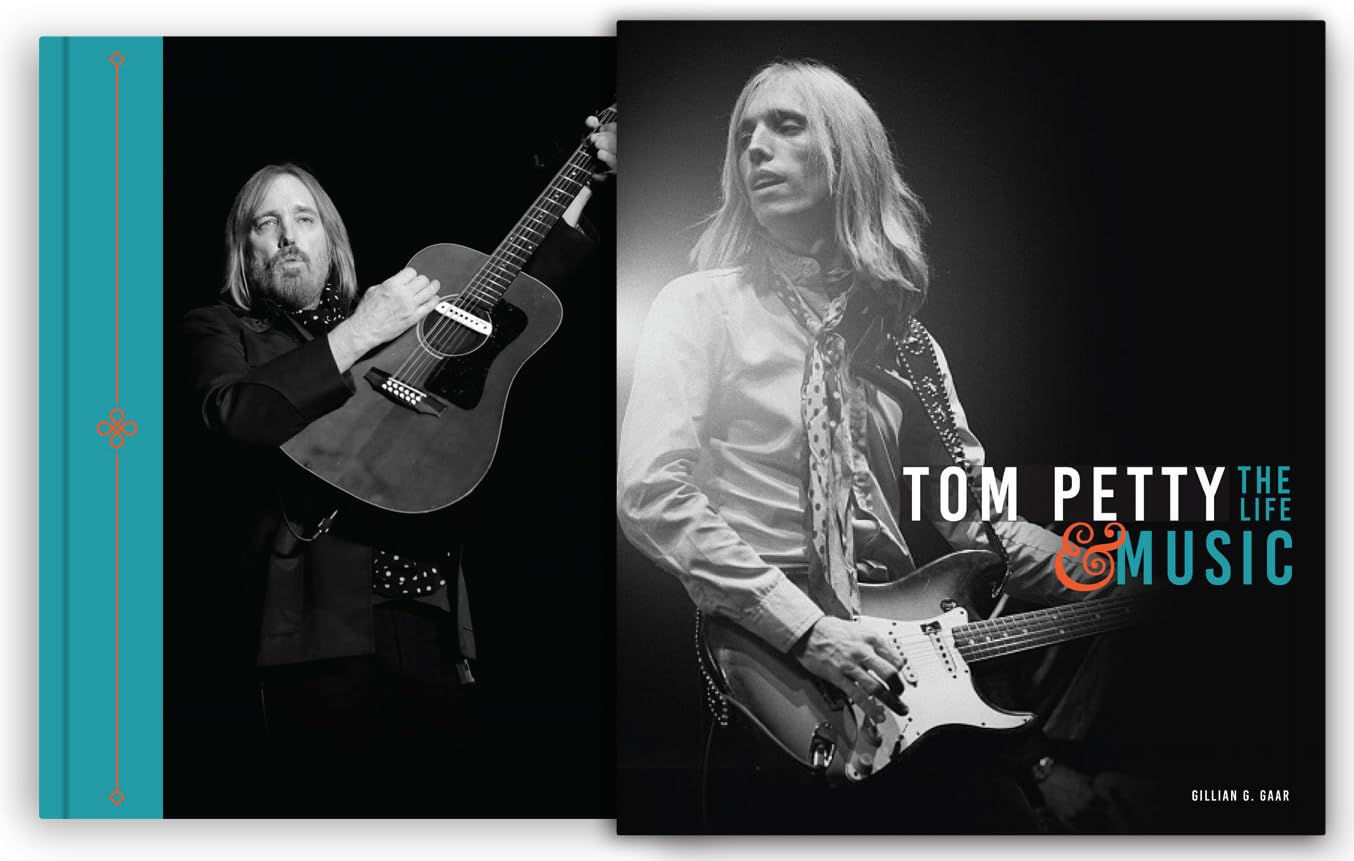
Tom Petty: The Life & Music by Gillian Gaar
Bruce Springsteen & Born to Run: 50 Years by Sean Egan
(Quarto)
Finding the perfect gift to impress and delight the obsessive music fans in your life can be tricky. Chances are that these folks already have every album or single released by their favorite artists. For studious types who scrutinize and memorize every detail in the liner notes of their vinyl sleeves, the stylish slipcase books from Quarto’s anniversary series are packed with detail and make a great choice.
Gillian Gaar’s 200-page book Tom Petty: The Life & Music takes a knowledgeable fan ’s-eye overview of the dearly departed rocker’s enduring impact. Released in time to celebrate what would have been Petty’s 75th birthday, the tome is broken into 75 chronological segments to mark significant events along the arc of his lengthy career. The pages pop with color photos of Petty, the Heartbreakers, gig posters, album art, and rare memorabilia. Petty’s solo work and his time with Mudcrutch and the Traveling Wilburys receive ample attention. The episodic approach makes this an easy coffee-table read to pick up during spare minutes, but Gaar’s research is sufficiently captivating to keep the pages turning for long stretches. Quotes are drawn from countless interviews as well as trusted sources, including Warren Zanes’ authorized Petty: The Biography.
The timeline is broken into five major segments. “Running’ Down a Dream” covers 1959-1978, describing Petty’s youth in Gainesville, Florida, formative favorites including Elvis Presley, early days with Mudcrutch, and the Heartbreakers’ breakout success. Petty describes the Beatles’ 1964 appearance on the Ed Sullivan Show as pivotal. “It was like going from black-and-white to color,” he says. Petty assesses “Don’t Do Me Like That” as his best song circa Damn the Torpedoes, and Gaar digs into the creation and motivation behind standout single “Refugee.”
“Into the Great Wide Open” represents the years 1979-1987, when the band was gaining widespread commercial success, becoming pop idols thanks to heavy MTV rotation of songs like “Don’t Come Around Here No More,” performing triumphantly before a global audience at Live Aid, and branching out to collaborate with Bob Dylan. Petty gets his first Rolling Stone magazine cover, skirmishes with MCA Records over the price of Hard Promises, and duets with devoted fan and friend Stevie Nicks of Fleetwood Mac on songs including the hit “Stop Draggin’ My Heart Around.” Petty talks about being recognized in public for the “You Got Lucky” video from Long After Dark as a turning point in his life. Personal trials included the episode wherein Petty shattered his left hand by punching a studio wall in a burst of frustration while working on Southern Accents. Subsequently, there was the devastating fire at Petty’s family home in 1987, caused by arson. Petty was confounded by the malice but made light of it at a show soon afterward. “It’s all right, really – they didn’t burn this,” he said to an Arizona audience, raising his familiar red Rickenbacker guitar overhead.
“It’s Good to Be King” from 1987-1996 sees success break even wider with solo smash Full Moon Fever, the advent of the Traveling Wilburys supergroup, and the creation of career landmark Wildflowers. Petty describes making Full Moon Fever with Jeff Lynne of ELO as a low-pressure situation. “It was just kinda ‘us out in the garage having fun,'” he says of making the breakout album. Songs including “Free Fallin'” and “I Won’t Back Down” came together with surprising ease and speed. Petty describes a troubled 1989 tour with the rowdy Replacements, saying he’d never had to pay for so much broken furniture before. The sessions yielding Heartbreakers’ smash “Last Dance with Mary Jane” for their Greatest Hits album would be the last for founding drummer Stan Lynch, who admits to being a “total dickwad” at the time. Petty says of Wildflowers, “That’s the best album we ever made.” It would produce his last Top 40 hit with “You Don’t Know How it Feels” and earn a Grammy award. Petty collaborated with Del Shannon, Roger McGuinn of the Byrds, and rockabilly hero Carl Perkins during this period. “Oh man, we had a ball,” he says of working with Johnny Cash on American II: Unchained.
“Won’t Back Down” examines 1997-2010. The Heartbreakers’ albums during this stretch didn’t saturate the public consciousness to the degree of their predecessors, but the band were nonetheless beloved kings of the road. A triumphant 20-show residency in San Francisco eventually led to 2022’s Live at the Fillmore box set. “The band was on fire,” says Petty of the freewheeling, anything-goes performances. Heroin use hampered creation of the Echo album but help from loved ones including future wife Dana York allowed Petty to turn the corner. He didn’t want the addiction glamorized and seldom discussed it. “It wasn’t the best period of my life,” he eventually said in a Rolling Stone interview. “But I am through that. I came out the good side.” During these years, the Heartbreakers received a star on Hollywood’s Walk of Fame and were inducted into the Rock and Roll Hall of Fame. Petty describes the 2007 reunion of Mudcrutch as “the most fun I’ve had in years.” The Heartbreakers performed at the Super Bowl and released the joyful Mojo album. Petty hosted Sirius XM’s Tom Petty’s Buried Treasure program during these years, digging deep and telling the stories behind lost gems of popular music. Petty associate Ryan Ulyate found three unaired shows recorded in 2016 following Petty’s passing. These were aired just weeks following his death. In a poignant moment, Petty signs off from the final show saying, “I’ll see you next week.”
“End of the Line” reviews 2012-2023, the period including Petty’s untimely death at 66 in 2017, just after completion of a major 40th anniversary tour with the Heartbreakers. During this period, the Heartbreakers released the underrated but potent Hypnotic Eye. Petty risked the ire of many southern fans by publicly speaking out and distancing himself from imagery associated with the confederate flag. Petty described the lengthy 40th anniversary tour as rejuvenating and simply fun, and the final three-night hometown stand at the Hollywood Bowl as “magical.” Just over a week later, he was gone. He’d succumbed due to a deadly combination of fentanyl and other prescription drugs used to treat pain from a hip fracture. He was remembered with a 2018 career retrospective album, appropriately titled by his daughter Adria as An American Treasure.
Sean Egan takes a similar approach to his 175-page book but dedicates his meticulous work to the context and creation of a single album. Bruce Springsteen and Born to Run: 50 Years breaks down formative factors, fierce determination against the odds, and the exhausting work that went into building Springsteen’s watershed third album with the E Street Band. Track-by-track analysis dives deeply into the evolution and realization of songs, including the album’s epic title cut, an identity-asserting manifesto about chasing a receding and “runaway American dream” that took six months to complete as Springsteen dedicated himself and his accomplices to experimentation and perfection of his vision. He insisted that the single be “the greatest rock record I’d ever heard.” Landmark fare, including the cinematic album opener “Thunder Road,” the soulful, semi-autobiographical “Tenth Avenue Freeze-Out,” and the album-closing urban opus “Jungleland,” gets its due, as does non-LP material that could have stood among the indelible album tracks in an alternative universe. At one point, the dramatic tale of a small-time criminal planning a big score, “Meeting Across the River,” was out, and the lesser “Lonely Night in the Park” and “Linda Let Me Be the One” were in. For that matter, there was a critical juncture when “Born to Run” itself wasn’t included in the sequence. Egan investigates influences, including The Animals and their role in shaping Springsteen’s class-conscious worldview as a songwriter. The book includes introductions to the invaluable E Street Band members, with a particular focus on the linchpin role of saxophonist Clarence Clemons. Egan examines the album’s classic artwork, covers the band’s potent live show, and traces the connection of Born to Run to later work, including the landslide success of Born in the U.S.A.
Other 2025 releases from Quarto include Queen & A Night at the Opera: 50 Years by Garr, Iron Maiden at 50 by Daniel Bukszpan, and Pearl Jam Live! 35 Years of Legendary Music and Revolutionary Shows by Chicago-based author Selena Fragassi. Notable entries also include Prince and Purple Rain 40 Years and Rush at 50. (quarto.com)
– Jeff Elbel
Category: Featured, Rock of Pages, Weekly