Spins: Supertramp – Crime of the Century • Crisis? What Crisis? – Half-speed LP Remaster
Supertramp
Crime of the Century half-speed LP remaster
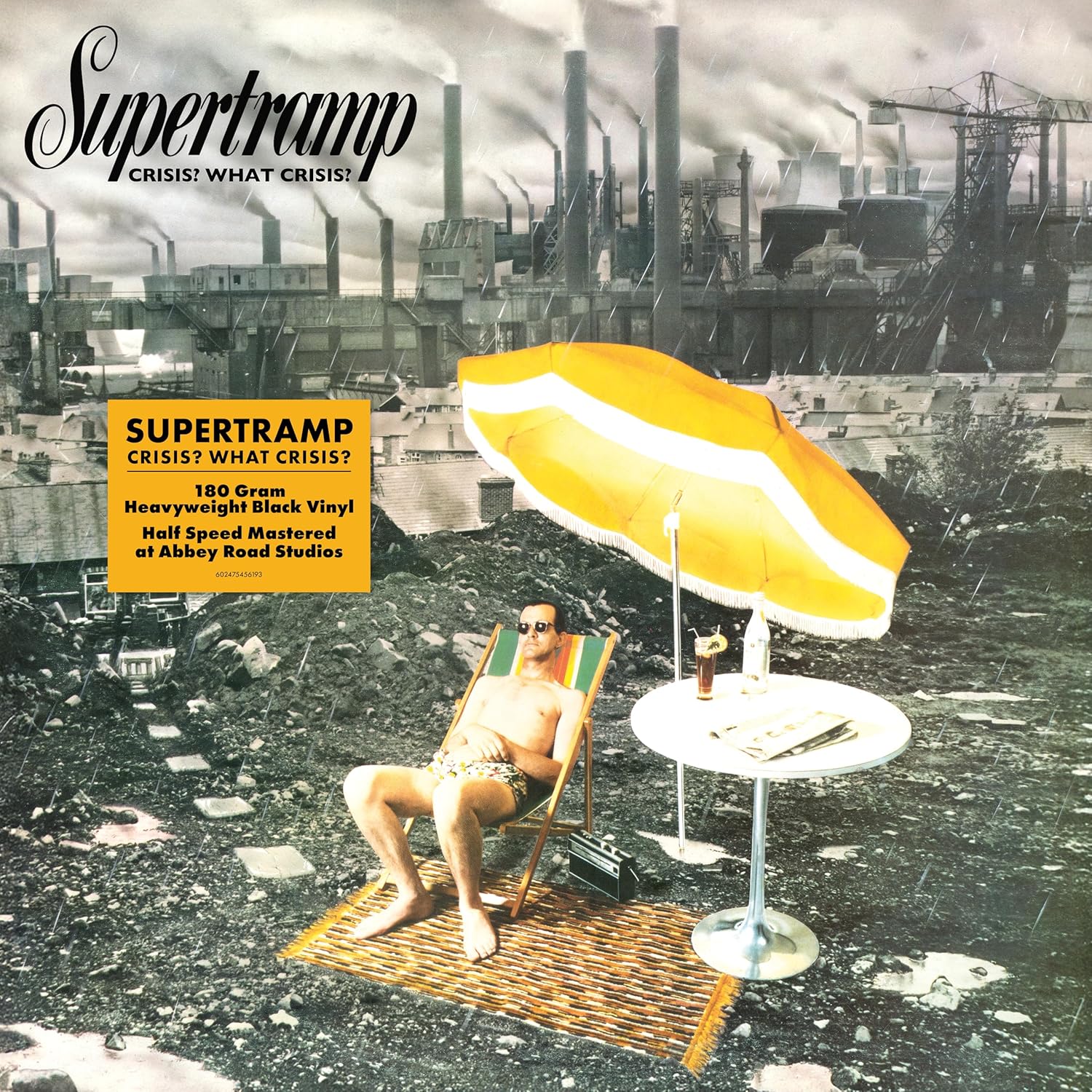
Crisis? What Crisis? half-speed LP remaster
(A&M/UMe)
These two Supertramp albums arrive as the first pair of entries in a campaign of vinyl LP reissues restored via half-speed mastering at Abbey Road Studios.
1974’s Crime of the Century was the English group’s third album and the first to feature the band’s classic lineup, with drummer Bob Siebenberg, reed player John Helliwell, and bassist Dougie Thomson. Arriving as the band’s commercial breakthrough and often considered Supertramp’s creative peak, the adventurous album notched the band’s first single in the Billboard Top 40. Rick Davies’ swaggering and authority-defying “Bloody Well Right” rose to the #35 spot. At home in the UK, the song served as the B-side to the lively, electric piano-propelled pop of “Dreamer.” Written by Roger Hodgson as a teenager, the latter song reached #13 on the UK charts. With public saturation of these singles, Crime of the Century has become justly recognized as one of the premier albums of the era when progressive rock held sway over mainstream audiences.
The plaintive, fusion-informed “School” opens the album with the slow, spectral wail of a harmonica. The song bristles with a girl’s scream on the playground before the band follows Thomson and Siebenberg into the song’s prog-pop groove. Hodgson’s lyric laments that school lessons prepare students to use their heads without teaching them to develop their hearts and humanity. Davies colors the song with a lively and melodic piano lead before singing a litany of dos and don’ts.
Hodgson examines his own insecurities on “Hide in Your Shell.” The singer’s “If Everyone Was Listening” is equally vulnerable, expressing a lack of control and inability to discern what others are truly thinking. Davies follows close behind on the grand and orchestral “Asylum,” insisting to others and himself that “I’m just as sane as anyone.” With lounge-jazz piano punctuated by Hodgson’s muscular guitar lines, Helliwell’s languid saxophone, and cinematic orchestration, “Rudy” sketches a lonely life cheated by long-suffering patience. “Rudy thought that all good things come to those who wait, but recently he could see that it may come too late,” sings Davies of the character’s mid-life crisis of identity.
Helliwell’s saxophone plays plaintive blues above Davies’ glistening piano, Siebenberg’s majestic percussion, and Richard Hewson’s stirring string arrangement during the title track’s long fade-out, bringing the song cycle to a close. The album’s bleak themes are tempered by an upbeat, optimistic tone, suggesting that the stated expressions are necessary steps toward exorcising self-imposed setbacks and embracing life in full flourish.
Marking its 50th anniversary this year, the 1975 follow-up Crisis? What Crisis? didn’t scale the heights of its predecessor but was an important stepping stone on the way to the success of Even in the Quietest Moments… and the global smash Breakfast in America. The album bridges the accomplished musicians’ progressive acumen with the more focused, commercial arrangements of the ensuing albums. Sessions for Crisis? commenced when the band was sidelined from touring in support of Crime of the Century due to Hodgson’s broken wrist. Some reviews have characterized Crisis? as disjointed, noting that possibly hastily composed fresh material was combined with leftovers from earlier projects. The recycled songs turn out to be highlights, including “Sister Moonshine,” the funky pop of “Another Man’s Woman,” spirited “Lady,” and “Just a Normal Day.”
The opening salvo of “Easy Does It” and “Sister Moonshine” differentiate the tone of Crisis? from Crime of the Century, with arrangements rooted in acoustic guitar rather than piano. The shimmering 12-string jangle of “Sister Moonshine” heralds delights to come like “Give a Little Bit” from Even in the Quietest Moments…
Davies’ piano returns powerfully on the stomper “Ain’t Nobody but Me,” alternating with a summery chorus that intertwines Hodgson’s and Davies’ voices. The song describes an abusive partner who declares that he’s the rock in his significant other’s world. Hodgson sings the album’s most progressive-leaning song, “A Soapbox Opera,” as a troubled parishioner who has come to doubt his religious elders. “Lady” strikes a balance between “Dreamer” and successor Breakfast in America hit “The Logical Song,” adding a whimsical finger-snapping vocal outro. Davies adds a comical touch to “Poor Boy,” singing his idea of a trumpet solo before leaning into his vocal and electric piano. Thomson’s sublime, bubbling bass part is reminiscent of Queen’s “You’re My Best Friend,” accented by Helliwell’s deft, lighthearted clarinet. Davies and Hodgson trade melancholy vocals with soprano saxophone on “Just a Normal Day.” Hodgson ponders weighty questions over sparkling acoustic guitar arpeggios during the unsettled “The Meaning.” Hodgson pairs the song with the contemplative “Two of Us,” wherein he ponders his insignificance. “Just as long as there’s two of us, I’ll carry on,” he concludes.
Crisis? What Crisis? didn’t chart a single on either side of the Atlantic. As a result, Crisis? is the most overlooked entry from Supertramp’s stellar run from Crime of the Century to Breakfast in America. Nonetheless, it’s a worthy effort and ripe for reassessment by fans of the hits. Consider it the Supertramp equivalent of The Unforgettable Fire, if that U2 fan-favorite had omitted “Pride (In the Name of Love).”
The band and producer Ken Scott oversaw the remastering effort for Crime of the Century and Crisis? What Crisis, with results that offer audibly enhanced detail, range, and clarity compared to vintage copies of the albums. It’s fair to note a rumbling noise floor in Crime of the Century‘s sparsest passages, such as the harmonica intro to “School.”
Crime of the Century: 9 of 10
Crisis? What Crisis?: 7 of 10
– Jeff Elbel