Cover Story: Cheap Trick • Won’t Slow Down
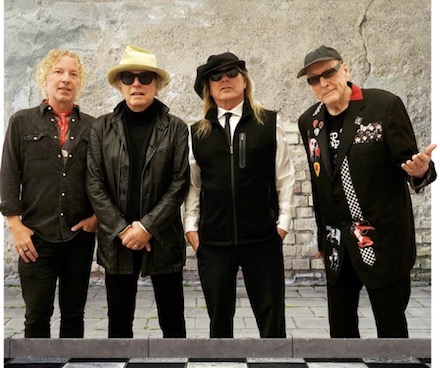
Cheap Trick
It’s not a cautionary tale exactly, nor is it an Abandon-All-Hope-Ye-Who-Enter-Here warning. But for any bright-eyed, optimistic young artists out there currently considering a career in music, Cheap Trick bassist Tom Petersson has a few wise words to offer that might, at the very least, give you pause. Or, at worst, stagger you as senseless as a freshly clubbed baby harp seal. The bassist doesn’t intend to be a buzzkill. But at 75, after over five decades with his core bandmates, vocalist Robin Zander and guitarist Rick Nielsen, he knows the nature of the Showbiz Beast. And he doesn’t pull any punches. “Do what you love, and you’ll never work a day in your life,” goes the old adage, he chortles. “But usually, doing what you love comes with a bunch of stuff? that you never knew you had to do, that you DON’T love, so most of the stuff you end up doing, you do NOT want to do. So it’s not like, ‘I won the lottery! Let’s get some money in here!’ It’s not like that — you’ve got to keep your head above water, try to raise a family, or whatever it is.” And make no mistake. Aside from open-heart surgery in 2021, when Zander’s son Robin Taylor Zander, a recording artist in his own right, filled in for him on tour, Petersson has led what outsiders might consider a charmed life. When he formed Cheap Trick with his old Fuse cohort Nielsen in Rockford, IL, in 1973, their unique melding of glam, metal, and British Invasion and power pop — later augmented by a nascent punk spirit on their first definitive studio sets (Cheap Trick and In Color” in ’77, Heaven Tonight” in ’78) proved a truly intoxicating mix; Also chartworthy, via early surreal singles like “Surrender” and a neo-Vaudevillian signature singalong, “I Want You To Want Me,” popularized on **At Budokan, a concert album recorded. In Japan, the group had been greeted from the outset like conquering heroes. Storied producers signed on to work with the quartet, like George Martin, Todd Rundgren, and Roy Thomas Baker, and the clever combo was not only honored with its own annual Illinois-wide Cheap Trick Day (April 1) in 2007, but a following Rock and Roll Hall of Fame induction in 2016. And the group never stopped making music. Cheap Trick just issued its latest effort, All Washed Up, its 21st overall, and it’s an elusive, rock-solid collection reminiscent of some of its best work, like the underrated “One on One”; Several tracks, in fact, would have fit well into those halcyon ’82 sessions, such as “Bad Blood,” the chugging title cut, and the monolithic anthem (and kicko? single) “Twelve Gates.” A crowd-addressing “Dancing With the Band” might even one day replace the classic “Hello, How Are You” as a new concert opener, and a ukulele-strummy “Wham Boom Bang” effortlessly tunes into the retro-vibe briskness of “I Want You To Want Me” — not an easy feat. All in all, reasons to be cheerful about his long-ago choice to roll the dice on the entertainment industry, right? Petersson sighs. It’s illusory, he confesses. “The business is NOT fun and enjoyable. But it all depends on your situation, as well. If you’re married and you have a home with mortgage payments, you’re not gonna move from Arlington Heights to San Francisco out of the blue, not unless you’re single, footloose and fancy-free, and you’re prepared to be sleeping in people’s garages, but that’s the way it’s gonna be. To be a musician means that you’re basically gonna be destitute.” You think you’ve won the lottery at first, he adds. “But look at the percentage of people who are successful. And all you’ve got is a lottery ticket.” Shirley Jackson herself couldn’t have put it more coldly. But fortunately, Petersson has a great sense of humor about it all, and an unflagging devotion to — and firm faith in — Cheap Trick and its still-crackling camaraderie. So he was in fine, fun-loving fettle for the rest of the 45-minute interview. But you can’t say you haven’t been warned, all you young hopefuls out there…
IE: Where do you live now?
TOM PETERSSON: Nashville, Tennessee. I moved there in 1995, and I just went there cold — I didn’t know anybody or anything. I thought I’d just more there because it was more convenient. At that point, I was living in Los Angeles, and it was just too far from everything for the amount that we traveled. So I just moved there and ended up liking it, and I’ve been there since ’95.
IE: What new friends have you made there, musically? Tons of artists quietly live there, people you would never suspect.
TP: Well, yeah. The first people whom I really connected with — and once I connected with them, I knew everybody in town — it was The Mavericks. Raul Malo, Jerry Dale, Robert, and that whole gang. So I’m still friends with all of them. Anyway, that’s how it started, and once I met them, I knew every musician in town. And there are so many people there that are so great, it’s really unbelievable.
IE: What are some weird phone calls you’ve gotten, inviting you to come down and join some recording session? Where you’re like, “Vince Gill? What?”
TP: Well, I did Insane Clown Posse, Frank Black, shit — I can’t remember! But not that much, really — it’s always just kind of the luck of the draw there, you know? And I’m not there all the time, so it’s hard to plan that kind of stu?. And then even if you plan, something else comes up.
IE: I’m trying to picture it…Do you live there in a rural or an urban environment?
TP: A farm? No — I don’t live on a farm. It’s very suburban, really. The city is downtown, and Lower Broadway is like Bourbon Street in New Orleans. So if you want that kind of scene, you can go down there, but most people who live there do not – it’s all tourists, so it’s really not got that much to do with the rest of the city. But there’s just music, all the time, at little clubs, everyplace. It’s not just the bigger venues.
IE: When you’re there for any protracted period of time, how does your average day begin? And when does music enter into it, or does it?
TP: Well, it’s different for me — I’ve got a job with Cheap Trick, so I’m not in the same situation as most people. It’s like living in Los Angeles — I lived there for ten years, but it was **in Cheap Trick, so I wasn’t looking for any work. So “How is it living in L.A.?” Well, fine, because when I go there I don’t have to do anything — I just hang around and then go back to my job. So I’m not there looking for work. And it’s the same thing in Nashville — I’m not a country artist, and I’m not a session guy, either. I’ve already got a job, so I’m in a different situation than most people.
IE: How’s your health?
TP: Fine. But it’s just the luck of the draw. I don’t have arthritis, I don’t have back problems or anything like that, so I’m just good to go at the moment. So I’m waiting to just fall down — that’s what everybody says, that’s the biggest potential pain of all. I don’t wanna fall down! As they say, it’s always something, as they say. So really, it’s a day at a time with everything — you don’t know WHAT’S coming up. And everybody’s in the same damned boat, so basically we’re all washed up, right? **Everyone.
IE: What — or who — is “All Washed Up”?
TP: It was Robin’s (album) title, and I just thought, “Boy, that is great! That’s funny, and it just kind of suited us. What’s it about? I don’t really know.
IE: There are four laundromat washing machines in the cover photograph, with a checkered one denoting Rick, of course. So which one of the other three appliances represents you? The red, gold, or white?
TP: Oh, I dunno. I dunno. It doesn’t matter, so, uhh, NONE of ‘em are me.
IE: Speaking of mortality, looking back on your life, what achievements are you most proud of? I mean, you actually INVENTED something, which is pretty damned cool — the 12-string bass. And how many people can claim that?
TP: Well, you know, basically what I invented, I guess, was a sound. You had to have your own sound, and that’s what I was looking for, and that’s what I do. But I don’t see it catching on with every artist, that’s for sure.
IE: They say Build a better mousetrap, and the world will beat a path to your door.
TP: Well, yeah. But usually, the person who builds the better mousetrap, somebody else figures out how to beat a path to their door with your idea. Isn’t that usually the way it goes? And this isn’t like, “Oh wow! I’ve really cornered the 12-string bass market!” It’s like, “Really, yeah, I guess so…”
IE: What sound did you picture in your head that was missing?
TP: Well, we had basically been a four-piece band, with Robin switching off on guitars back and forth, so it was sort of a setup like the original four-piece, with a lead singer, guitar, bass, drums, and a lead singer. So how do you make that sound bigger, without adding people? Well, just get the biggest sound you can. And that was it, and it just seemed like a good idea. And I met Paul Hamer and Jol Dantzig at that time — they had a used guitar store in the city, or outside of the city, and they were starting a guitar company (Hamer), and I brought it up to them. I said, “Hey — I’ve got this idea.” And they said, “Yeah, but we don’t know if that’ll work, so how about we just hedge our bet and we’ll do a ten-string, so there won’t be so much tension?” Then they came to us. We were opening up for KISS at that time, and they showed up at one of the shows with the ten-string, and I just started using it right then, and they said, “Yeah, you’re right. We should go all the way with the 12.” So there ya go. The first one was a ten, and they were thinking, “Well, if it doesn’t work, you can just take two of the strings off and just have an eight-string.” And I was like, “Welllll…okay.” But at least they did it!” But it was just to make it sound like an orchestra, you know? It was basically the same tone, the same sound, the same rig I would use with my four-string. It was the same setup, so it’s like a 12-string guitar player is playing along with whatever I do.
IE: What was it like backstage, touring with KISS in the ‘70s? Awesome?
TP: Well, yeah! And they were there all day doing makeup and all that. And I wasn’t sitting around there watching ‘em do it, but I think they did that stu? themselves, and they weren’t always singing the blues about being there all day long and walking around like that, but it couldn’t have been so easy — it was a pretty complicated makeup job they had going on with all of ‘em. And yet they had to still remain anonymous somehow. But they did that for a long, long time. And of course, success comes out of left field for almost every act, like, “Wow! I didn’t expect THAT to work!” It’s always something you just don’t expect.
IE: Were you friends with them?
TP: Well, yeah, because we were with ‘em all the time. So yeah, we hung out, and every night we would see them. And they said that we were the only act that didn’t get booed off the stage. And it was like, “Oh! Okay!” Don’t worry about any kind of response, but if you don’t get booed off the stage, you’re doing fine! So it was interesting. We hadn’t done anything like that before, really — we’d been playing in bars and clubs, really, trying to get ahead. And they had come to see us — I think they saw us at Max’s Kansas City or I dunno. But I remember Ace saying that he thought our image was one of the greatest images he’d ever seen. He said, “Boy, that’s a good one!” He got a big kick out of it. And we did too. But most people did NOT get a big kick out of it. But in the end, I guess it worked out.
IE: It’s almost like you couldn’t get by with that 50/50 cover-image split today. Folks wouldn’t see it as PC to have two geeky guys in one photo, and two stereotypically handsome guys in the other. The goofy pair on mopeds, while the dashing duo stretched out on macho choppers? That would not fly with the Woke Police right now.
TP: I guess not. When did it ever? All we’d ever hear about when we went into clubs was, “Yeah, guys would be great, but what you oughtta do is dress your guitar player up like Hendrix and dress your drummer up like David Bowie!” And we were like, “Uhh..okay..” “When is your guitar player gonna get with it?” That sort of stuff. And people would accuse us of being a put-together group, like some corporate thing. But it was like, “No, NO!” That was just basically the way it was.
IE: I always wondered…Were you friends with Gary Richrath of REO Speedwagon? Your new album cut, “The Riff That Won’t Quit,” reminded me of some of his similarly-named instrumentals, like “Unidentified Flying Turkey Trot.”
TP: No. We knew him, just briefly, from being in a band that was playing in bars. But no, I did not know Gary — I’d met him, but that was about it.
IE: You’ve said that the 12-string bass was finally noticed, en masse, on 1978’s Live at Budokan?
TP: Yeah, Live at Budokan is the 12-string bass, yes. You can hear it in the studio, but live, it’s a different story. Everything is different — it’s not overdubbed, it’s live, it’s all just right there. And you have to make it as big as possible in that situation without adding anything, without playing along with tracks, which we don’t do. But first, we got accused of that, because people would hear a guitar in there, and they didn’t say, “Who’s doing that?” Or “Wait a minute – Where’s that coming from?” It was like, “Aw, these guys are phonies up there!” And we were like, “What the hell? No, we’re not! That’s the LAST thing we would do — we’ve never done that!”
IE: What else besides the bass are you most proud of? Cheap Trick has some impressive longevity. When you add it up?
TP: You know, I don’t know what I’m most proud of. It’s just that we keep going. I don’t even know what to say about it — it’s just what we do. And I mean, what else are we gonna do? And we’ve never been **that popular, so we’re just doing music that we personally like, and apparently, it’s not what the majority of people wanna hear, but we’ve been successful enough that we can continue. Most people aren’t successful enough, so they can’t keep doing nothing. Which is usually what happens, so you can’t keep going. We’ve been successful enough to keep going, but not successful enough to just stop. You know what I mean? We have to work, and we’re working, so what are we gonna do? Just retire? So we’re always thinking about the next record — we’re still doing that. It’s a lie, “Oh, we’re done with that now! What are we gonna do for the next one?” But it’s like, “Wait a minute! This one’s not even OUT yet!” So we’ve always had an outlet for songwriting, so you just keep coming up with ideas all the time, and then when it’s time to do another record, it’s like, What ideas does everybody have? Here they are! Let’s put ‘em together, okay, now let’s decide -What are we gonna work on? Oh, that’s a good one! Let’s do that! And let’s put this part here…And then we put it together, pick eleven songs, and go for it. And if one doesn’t work, you toss it out and do something else — that’s just what we do. Do we make any money, making records? No. So what is it? A loss leader to sell T-shirts? I guess so….
IE: Was Robin’s son in the band for a while?
TP: Yeah — he’s been in and out. He’s been in there, but he isn’t at the moment. He’s a great singer, songwriter, player- he plays every instrument, and he’s really great. So he’s working on his own career right now.
IE: One thing you have to say about Rick — you call his bluff?, and he doubles. Didn’t he actually insist on releasing an actual eight-track tape of one of your recent albums?
TP: We did that for one! I don’t think it was the last album, but it was several years ago, and we just did it as a joke. And we were the top-selling eight-track, since there was no competition! I don’t think there was an actual Billboard chart at that point, but I doubt it because they weren’t really making them.
IE: And you also had to occasionally pick up the slack for the customarily-unstoppable Rick, especially with the death of his parents, which hit him really hard.
TP: Yeah. But it works like it always does — somebody’s always picking up the slack, and it just works out. There’s not just one of us doing everything — it’s all of us. If there’s a song we’re doing, and one of us doesn’t like it, we don’t do it. We just wanna make a record that we think sounds cool — that’s it. And it’s not doing anything for us, except that we’ve got a certain fan base, so why not make a record?
IE: IN terms of the 12-string bass, don’t you work with your own signature-model Gretsch now?
TP: Yes. I’ve got different basses from different companies, but Gretsch is really the first major guitar company that I’ve ever worked with. It was always boutique builders, like Hamer and Chandler, who were just small builders because there was no market for 12-string bass, except for me. So I’ve had several different builders over the years build different 12-strings, and Gretsch is one of them. So I have a signature one, which you can order through Gretsch at their Custom Shop — it’s not like it’s just sitting around in stores, where you can walk in and try it out; you have to know ahead of time that that’s what you really want, and then order it. And I just love the look of it, the Country Gent. It goes back to The Beatles. I love Rickenbackers, Gretsches, and Ludwig drums. You can’t get ‘em outta your system. When all that happened, I was 13, 14 years old — the British Invasion, a perfect age! And that’s the shit I loved, and **still do, to this day.
iE: As I recall, IE, Rick, wasn’t a huge punk fan. Did you accept it when it came crashing in back in ’76, ’77?
TP: Oh, are you kidding? When that Sex Pistols album came out in ’77, that was right before we started our second album, **In Color. And that was like, “Alright. This is fucking GREAT! We LOVE this stuff!” And we had a new producer at that time, Tom Werman, and he just thought that was the biggest bunch of bullshit he’d ever heard. So he was like, “Alright, no, you guys have to be a POP group! You’ve gotta get on the radio!” So that was how that record happened, and you know, it worked in Japan. Which we weren’t concentrating on at all — that just happened, that kind of thing. And we almost saw the Pistols in Dallas, Texas. And we were on our way to Dallas, and our road manager at the time, Kirk, got lost. And we were driving and driving, and saw a sign saying ‘Houston — 30 miles,’ and we were like, “Wait a minute! Houston?! That’s why we missed the show. But with punk, does that mean everybody liked all those groups, or all the songs? No. But it’s like there was just something about it, and it was the kind of thing, too, that kept pissing people off so bad, it was just hilarious to us. And we were like, “Alright! These guys have got a sense of humor, and this is great.” And that record is great, that Sex Pistols album — excellent songs. But we liked the first Alice Cooper stuff — we saw Alice Cooper in Lolly’s downtown on Rush Street, when they had that first album out, and I would not wanna go anywhere in drag like those guys were. It was like, “Oh my God!” We just thought it was hilarious — we thought they had some nerve walking into Lolly’s. You can imagine. And that crowd was NOT into it. But we loved the MC5 — their live record is unbeatable. There was just all sorts of stuff like that.
IE: What philosophies have sustained you over the years? Or, what do you know to be true Today that you didn’t back in the mid-‘70s?
TP: Uhh…that nothing is true. You’ve got to just handle it, day by day, and see what comes up. But making records really means the most to us — that’s gonna last. Or not. But that’s what we put everything into, and then we go out and have to make a living.
IE: Well, before we sign off, I have one technical question for you. You were born with one ’S’, as Tom Peterson. When, why, and how did you acquire your second ’S’? Call me curious….
TP: Well, originally, it was something to make it stand apart. We’re from a town, Rockford, where it’s all Swedes. Well, not ALL Swedes, but a lot. You’d open up the phone book, and there were like 30 pages of Petersons. And the name originally had two Ts and two Ss, but Ellis Island said, “You don’t need all those consonants — get rid of ‘em.” So I just added it in there, just to make it stand out. And it did. But now it’s kind of confusing, since my real name has just one ’S.’
IE: If you look back at The Rolling Stones, he used to be Keith Richards, with all the songs credited to Jagger/Richards. But somewhere in the ‘60s, he got an extra consonant, too, and quietly became Keith Richards.
TP: That’s how I keep mispronouncing his name, because I know him as Keith Richard, without the ’S.’ But that was probably because it sounded like Cliff Richard, or Little Richard. It’s not Little Richards, you know? So he took out an ’S,’ and I added an ’S’ to my name!
-Tom Lanham
Category: Cover Story, Featured, Monthly