Cover Story: Local H • Run It Back
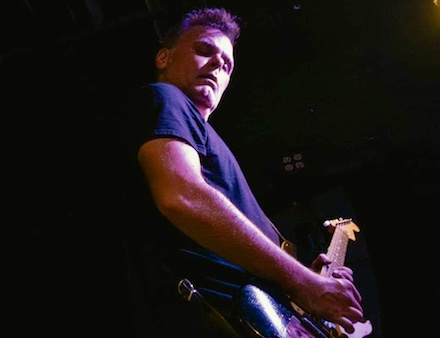
Scott Lucas of Local H
Think about a time when you screwed up. A time when you knew things weren’t right, but it was too late to change things. If you had the chance to go back and make things right, would you? For Scott Lucas, the moment he knew he messed up was with the release of Local H’s debut album, Ham Fisted. He has a complicated relationship with the record. Though it helped kickstart Local H’s career, he doesn’t like the record, and 30 years later, he still regrets not pushing himself more.
Released in 1995 at the tail end of the grunge movement, Ham Fisted wasn’t a success. It didn’t chart, failed to register with listeners, and received poor reviews. Lucas wasn’t surprised by the lukewarm reception. Before the album’s release, he knew they had failed and could’ve done better, but it was too late. Amid lackluster sales and unfair comparisons to Nirvana, Local H rushed back into the studio to give it another shot before their label dropped them. As Good As Dead arrived the following year to bigger fanfare, selling over 320,000 copies, thanks in part to their hit single “Bound for the Floor.” It was an unexpected success that did what Ham Fisted failed to do.
Of course, Ham Fisted eventually found an audience. Retrospective reviews treat the record with more kindness and are a favorite among many fans. Yet, the album continued to haunt Lucas. Even though Local H found success and would go on to make eight more albums and a movie, that record kept nagging him. So, when it was time to discuss the record’s 30th anniversary, he decided to settle unfinished business. Rather than do a standard reissue with some bonus tracks and acoustic renditions, Lucas took a cue from Al Jourgensen and re-recorded the entire album.
Returning to Steve Albini’s Electrical Audio studio, where parts of Ham Fisted were laid down, Lucas took apart the songs, rearranging them to create entirely new compositions. No idea was too absurd or ridiculous to consider. The only thing that mattered was that the songs were fresh and exciting. Wanting to make it a “family affair,” Lucas brought in people he’s worked with throughout his career, such as Eric Oblander and Max Crawford. He also brought in new blood, like Tuff Sudz and Sincere Engineer, to breathe new life into the songs. Much like Jourgensen accepted Ministry’s early new wave work on The Squirrely Years, ReFISTED is Lucas’ way of making peace with a record that hasn’t sat right with him for the past three decades. By revisiting his past, Lucas is now poised to move forward into the future.
Illinois Entertainer: This year marks the 30th anniversary of Ham Fisted, and to celebrate, you’ve re-recorded the album instead of releasing a standard deluxe edition or a remaster of the record. What led to the decision to re-record that album?
Scott Lucas: Well, a couple of things. A real remaster of any of those records we did for Island [Records] is kind of impossible because they’ve lost the tapes. We’re fairly certain they went up in that warehouse fire. Either that or they just recorded over them years ago, but they won’t tell us. So, we can’t really remaster from the original tapes. Also, I’m not a huge fan of the first record. By the time we were done making that record, by the time we were mixing it, I was already like, we shouldn’t have done this. We should have changed this or that.
I’ve had this relationship with this record for about 30 years, where I knew it wasn’t the best we could have done. So, when we were thinking about re-releasing it, I was like, what if we re-release it without the first song? I had all these ideas, and then I realized I don’t really like tampering with original recordings. So, I thought maybe we should make a new version. That’s when I realized I was thinking about making a new version of the record, sort of like a redo, so I could go back in time and fix everything I wish I could have fixed.
IE: What was it like to revisit these songs you first recorded 30 years ago? What was it like stepping back into that world?
SL: The first record’s pretty emo, so that was funny to realize. It’s very earnest, but then there’s a lot of ugliness in there. It’s a very serious piece of work by some very serious young men. So that made me laugh. There’s undeniable energy, and one of the things I didn’t want to do is a top-to-bottom acoustic redo. I didn’t want to take the balls out of the record. So, trying to match that energy was really physically demanding. Trying to keep up with my 24-year-old self kicked my ass.
IE: I’m curious because you mentioned at the mixing stage for the first album, you knew something wasn’t right. When you had that realization, what stopped you from making changes at that point?
SL: That would have been a situation that would have required some clout we didn’t have. That would have required us to go back in and re-record the album, or rearrange the songs, or write more songs. This is something we’ve already spent a month on. And you’re at the end of it, and you realize you’ve kind of failed. But what happened was we were at the studio mixing the record and sleeping above the studio at night. So, our A&R guy got me an advanced cassette of Shudder to Think’s Pony Express record. I remember just sitting up there listening to that going, ‘Ah shit, we should have done this.” Or we should have tried harder. Or we should have tried to swing more for the fences. But at that time, we didn’t want to swing for the fences. We didn’t want the producer to produce us. We just said no a lot. He’d want to turn up the vocals, we’re like no. We want to change the sound of the snare. No, everything’s dry and flat. We wanted to present the band in this unvarnished light so people could see where we started. But by that point everybody, even us, was past that. So, we weren’t quite going for it.
We were being given this opportunity, and we were making most of it. We were looking at it like, this is starting point A. The next record will be better. It was that kind of fucked up, weird thinking. We might have had some guilt being on a major label. It’s just a record that doesn’t have as many twists and surprises as it should. So, going in with these songs I wanted to take them apart and sort of change them. I would look at each song individually and think, what’s going to make this more fun to listen to? What’s going to make this more exciting? And I would do those things. I mean, it’s just a chance to go back and redo things. It’s a very Peggy Sue Got Married type of situation with this record.
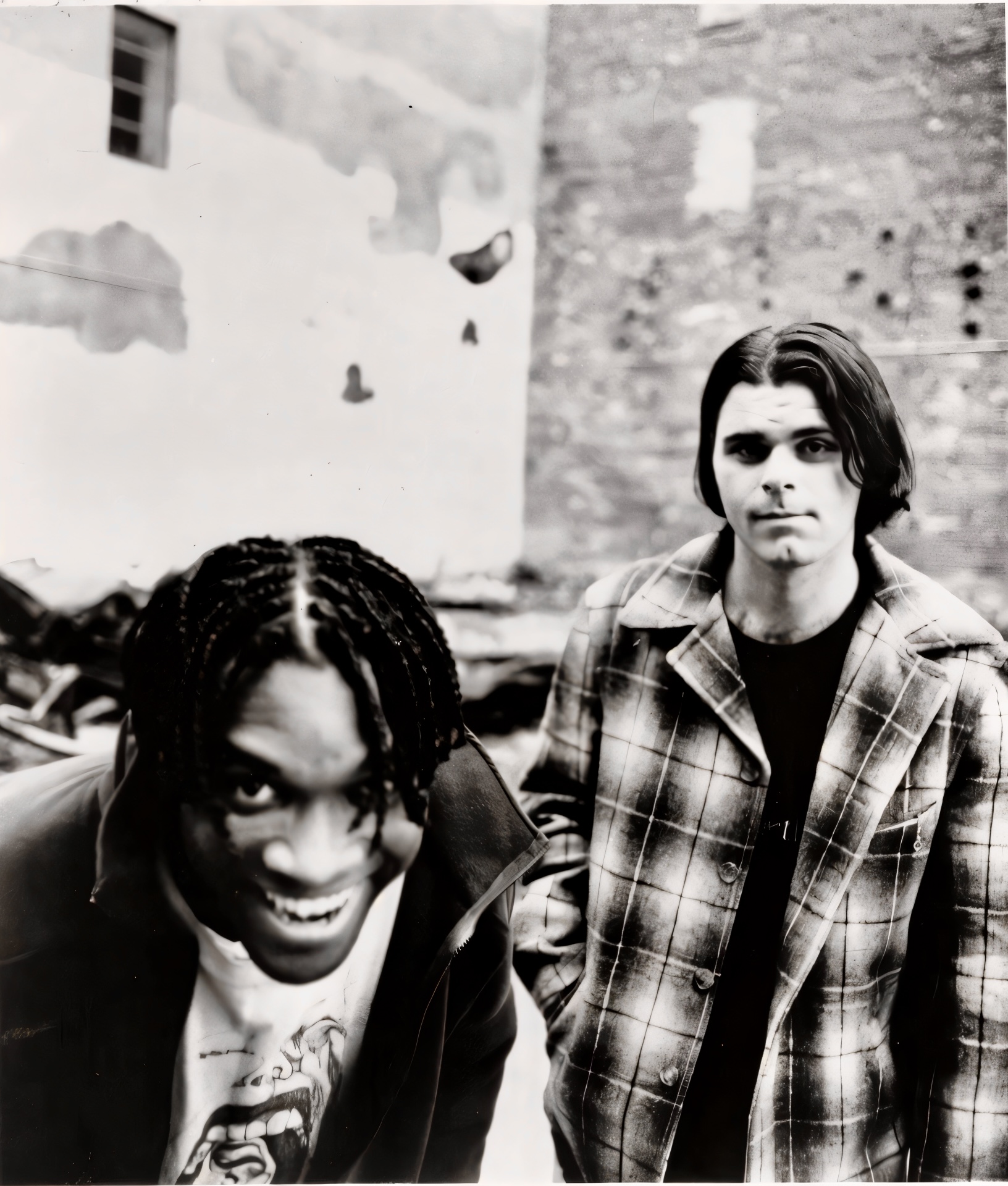
Local H 1995 – L to R: Joe Daniels and Scott Lucas
IE, I was listening to both records back-to-back, and this isn’t just you redoing the vocals and adding little new flourishes here and there. Some of these songs feel completely different, like “User” and “Sports Bar.” When you went in to re-record these songs, did you already have an idea of how you wanted to revamp them, or did it come about as you were kind of in the studio reworking these songs already?
SL: No, we spent some time in our practice space rearranging these songs. I spent a lot of time just thinking about it, not even playing it or working it out, just thinking about it. With “Sports Bar,” I was like, let’s strip it down and just focus on the ugliness of the lyrics. I never played it or rehearsed it or anything, so what you’re hearing [on the record] is the first take. I didn’t even know how I was going to play it stripped down. We tried it a few other ways, but I liked the first take. There’s just something really naked and vulnerable about it.
“User” is kind of about lunk-headed, sexist rock and roll, but it’s played in such a way that I don’t think everybody got the joke. So, I had no interest in trying to do that again. I had this idea. What if we mixed “User” with “Ghost Rider” by Suicide? Again, what you hear on that version is a first take of us jamming and then putting the song together. That was a lot of fun for us. That song was probably the most excited we got in the studio because we didn’t really know where we were going; we only had this idea.
There were other songs we did labor over, like “Manipulator.” We had a really strong idea of rearranging that song and making it more complex. “Strict-9” was like, let’s turn it into a Spaghetti Western song. We had Max Crawford come in from Poi Dog Pondering. And I said, Ennio Morricone, and he knew exactly what to go for. So yeah, I guess you’re right. A lot of it just sprang out of ideas. Taking a song and mixing it with something else was usually the impetus.
IE: It’s a great way to tackle it because it gives these songs new life. They are so different, especially if you’re listening to both records back-to-back. And if someone decides they like the original version of “Manipulator,” the first record is still there. Here, you gave a lot of these songs a facelift. It’s not acoustic versions or remixes.
SL: Yeah, I didn’t want to do any of those things. As soon as you heard it, I wanted you to realize it’s not the original version. I wasn’t trying to fool anybody. I didn’t want to make it sound more commercial. If anything, I wanted to make it sound less commercial. I wanted it to sound like a Touch And Go record from the ‘90s. Some songs that were based on bass lines I thought instead of treating it like a grunge song, what if this was a jazz song? Why not put jazz elements into it? I know the J word is a dirty word, but just doing things like that and getting people to come in. Deanna [Belos] from Sincere Engineer came in to do my vocal on “Skidmarks,” and she just killed it. It was trying to have fun with it and make a record I would want to listen to. I also wanted it for those people who have been listening to Ham Fisted for 30 years, who would appreciate the changes. But then you’re right. You’ve got the other people that are like, well, I don’t want any change. Well, the original record exists. We didn’t George Lucas you. There are two versions out there.
IE: Going back to Ham Fisted, the album didn’t receive a huge response and didn’t perform well with critics. Some bands might’ve accepted that failure and decided to pack it in. What kept you guys going to get to that second album?
SL: We’d grown up on bands who developed over time. So, there was this thinking like, let’s do a Zeppelin thing where our first record is super raw. We haven’t quite grown into ourselves yet. And then on Led Zeppelin II, they start to grow into themselves. That was our thinking, but major labels didn’t work that way at the time. We’re lucky we got to that second record because nobody was into the first record and it kind of tanked. I think the only really good review we got was from Michael Harris in the Entertainer. But for the most part, people couldn’t see what we were up to.
So, while that was happening, we got yanked off tour to go back to the studio before the second single even came out. And I was like, come on, you can’t do this. But I think our A&R guy was scrambling to get us back in the studio and make that second record before the people up top were ready to pull the plug. So, he was doing all this stuff, not letting us know, but making moves behind the scenes, thinking, let’s get these guys in for the second record, I know they can make.
Maybe the second record should have been the first record. Hindsight is 20-20, but that’s kind of the danger with doing records like this. You can’t change things. There’s also this idea that in order to keep moving forward, you have to ignore the past. I don’t know if that’s true. It’s coming to terms with our past and with this record, it’s unfinished business. Are we better musicians? Am I a better singer? Am I a better songwriter? It’s a good kind of nostalgia. It makes you better in the present.
IE: It feels like you’ve tackled something that’s been nagging at you for the past three decades. Now, you’ve faced it, defeated it, and can properly move on.
SL: I mean, there’s that idea of don’t look back. I get it, but you’re through with the past, but the past isn’t through with you. I think you can move forward artistically by taking stock of where you’ve been and sort of responding to that. It is an interesting way to go. We haven’t written the same song over and over. We have tried to push ourselves. Our records don’t sound the same as they used to. I don’t feel like I’ve ever used the past as a crutch. So, I think I’m allowed this one time.
IE: I think you’re allowed. What has been your takeaway from the overall experience of revamping these songs you wrote when you were in your twenties?
SL: I know there are some ideas that still pop up in songs I write. There are themes, and I like stuff like that. I like it when I can recognize themes in Hitchcock movies and stuff like that. There are obsessions and themes that artists keep revisiting over the years. And I see that I do that. You’ve just got to become comfortable with that and not see that as a limitation rather see that as your canvas. I remember Shoes talking about people criticizing them for constantly writing three-minute pop songs about girls. And they’re like, that’s just the canvas we choose to work on. The challenge of trying to find something new and interesting to say within those confines is what keeps them going. That’s the challenge of it. That’s why they do it.
IE: So now that you’ve remade this album, what are your feelings about it now? Have you finally made peace with the record?
SL: Well, yeah. The songs are still physically exhausting to play. So, we haven’t really been playing any of them on this tour. It’s not like we’re out there like, let’s play these songs. I spent plenty of time in the studio with these songs, and I feel like I did what I set out to do. I don’t need to play them every night (laughs).
IE: Speaking of, you guys recently started the fall tour with Everclear and Sponge. How’s that going?
SL: It’s been great. All the shows are packed. Everclear is from Oregon, so we’ve been out for about two weeks, and we haven’t even left Oregon. I played like six shows in Oregon and four shows in California, so far, and we’re having a good time. We brought my dog out with us. It’s a lot of fun to tour with her.
IE: That’s so sweet! Now you’ve got the tour underway and ReFISTED is out, have you guys started talking about the next proper new album?
SL: It’s definitely time to think about it. We’d put out this movie [**Lifers], which kind of took all my time for like three or four years. People were asking about a new record then, but I just couldn’t. All my mental energy was focused on that movie. So as soon as I was done with that, the next idea that popped into my head was to make [ReFISTED]. Suddenly, I was really excited about making a record, but it was remaking Ham Fisted.
Now that this is done, I’m just waiting for the next idea to pop into my head. Hopefully, that’ll be the next record. Because it’s certainly not going to be redoing As Good As Dead the way we did with this. There’s no reason to redo a record that’s successful. That’s like people remaking popular movies. It’s like, why? Let’s remake movies nobody likes. But I’ve got my antenna up, and maybe that next idea is right around the corner.
ReFISTED is out now. Local H will wrap up their fall tour with Everclear and Sponge at Vixen (McHenry) Thalia Hall on November 2nd.
-Ashley Perez-Hollingsworth
Category: Featured