Cover Story: Natalie Bergman • Redefining Legacy
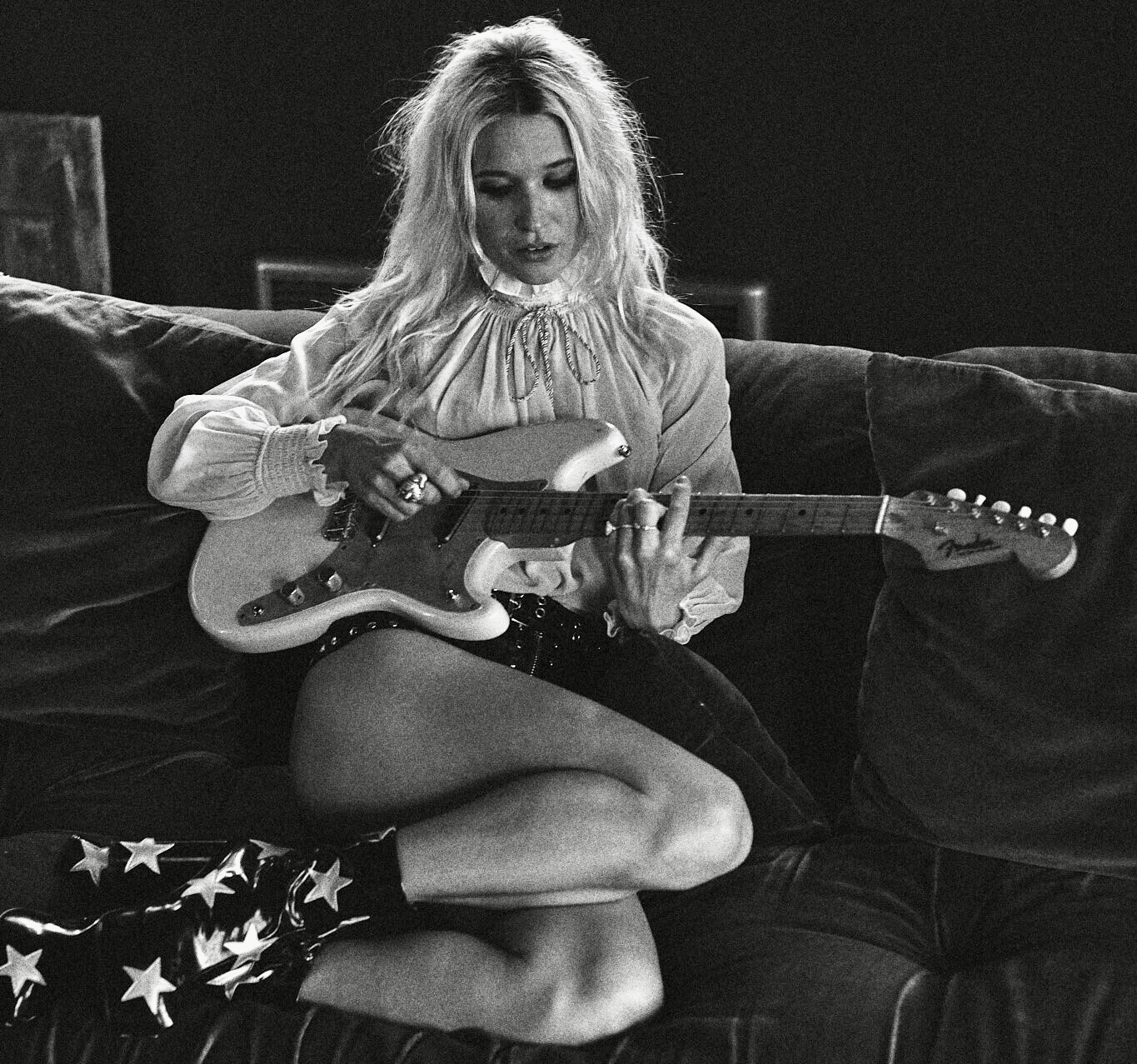
Mortality. It’s a real motherfucker. And, sadly, the existential concept of Legacy — as in, how will we be remembered after we’re gone? — Is there nothing you ever considered in your brash, reckless youth, when you’re too busy blazing your own trail to a bright, accomplished future? And when classic Gospel hymns assured us that “The Old Account Was Settled Long Ago,” why worry? What could possibly go wrong? Yet it’s only when you advance in years that a new carpe diem, vita brevis clarity surfaces, and all your long-forgotten mistakes start rising, Lazarus-like, from their catacombs, to haunt and/or remind you. The bullet point, of course, is that you could be hit by many unexpected charges at the end of your pleasurable days on this plane.
But this story concerns — and celebrates — someone who has also seriously considered mortality and legacy lately, the Barrington-bred singer-songwriter Natalie Bergman, who, with her older guitarist brother Elliot Bergman, has maintained an alt-rock duo dubbed Wild Belle for 14 years, releasing three albums and three EPs. Yet on her two subsequent solo sets, 2021’s Mercy and the just-issued follow-up My Home Is Not In This World, she’s been consumed by deep What-comes-next reflections, with all of their accordant Time-left-here-on-Earth ramifications. Call it a Vision Quest, which she first addressed in Mercy’s all-Gospel originals (like “Sweet Mary,” “Talk To the Lord,” “Home at Last,” and “I’m Going Home”), then in the more obliquely-phrased, less tabernacle-reverent new followup My Home is Not in This World. She’s been desperately seeking illumination, answers to life’s most enduring, ponderous questions regarding Death, since, to date, (and as hard as Harry Houdini tried to contact his late mother for afterlife proof) there have been no accurate reports sent back from the Other Side.
Uppermost in that thought process? The artist’s father, Judson ‘Jud’ Bergman, passed away tragically in San Francisco back in October of 2019. He and his second wife, Mary Miller, were heading to SFO when they were struck in a head-on collision with an alcohol-impaired driver going the wrong direction on the freeway; Everyone died instantly upon impact. And his Account had, indeed, been settled long ago, and — his daughter gradually discovered — at 62, he had the kind of selfless track record that your average sinner could only dream of, or pray for, if they were so inclined. And her father’s benevolent legacy seemed to grow exponentially with every post-mortem day. On Saturday, October 12, 2019, his funeral was held in Chicago’s roomy, 1,200-capacity First Presbyterian Church, which boasts the largest pipe organ in the Midwest. “And there weren’t enough seats — we filled it to the gills, and the balcony was so overcrowded that we were worried that it might collapse,” recalls Natalie of the first sign of how beloved a figure Jud had been. “And you really see how people are in their fullest when they die. People came from all over the world, so many people knew him. And it was just beautiful to hear how he moved people and helped people his whole life. He was doing the work of the Lord, but not asking for any sort of praise. And I think that’s kind of the best way to help people — you don’t do it to be recognized — you do it to actually help them.”
Everyone had a soul-stirring yarn to relate. The elderly parking attendant at her dad’s firm, who was once so down on his luck that Judson quietly put him up at the family abode for several life-saving months. Bergman also regularly offered gratis housing to countless others in need, be it friends struggling through divorce or other life challenges. “And I had no fucking idea! I was like, ‘Wait! What?’ Dad did things…mercifully, you know?” His daughter found herself marveling as she fielded the veritable flood of funeral circumstance Good Samaritan reports. Even President Barack Obama had a kind story to tell. “My dad was a basketball player, so he was playing a lot of basketball with Obama,” Natalie notes, still dumbfounded. “So Obama was telling me that my brother Elliot would come and play basketball with them, and they’d always be like, ‘So you’re Jud’s son?” They couldn’t believe it because he was so much worse at basketball than my dad, so everybody teased Elliot.” And then the testimonials really started rolling in.
Russian chess master Garry Kasparov observed that “In a world and industry often dominated by doomsayers, it was a rare pleasure to encounter Jud Bergman’s positive energy and optimistic outlook.” At the company he helped launch in ’99, Envestment, the Columbia grad had revolutionized the financial service technology sector while never forsaking the art, music, nature, travel, and solid Christian values he’d grown up with on his parents’ BergmanSilo manufacturing business, back when he regularly played the trombone. He stressed the importance of travel. He encouraged his kids (son Bennet, a poet, and daughter Elise, a fashion designer and musician) to find creative outlets as well, which accounts for Elliot’s enduring passion for not only Wild Belle but also the construction and playing of intricate kalimbas. Dad’s oft-cited live-and-let-live motto? John Quincy Adams’ thought-provoking “I am a warrior, so that my son may be a farmer, so that his son may be a poet.” In tribute, one co-worker recalled his playful office nickname: “Dos Equis, The Most Interesting Man In the World, because he knew so much about every topic we brought up.”
Natalie Bergman chose a couple of methods to grieve. First, she ensconced herself in New Mexico’s noted Monastery of Christ in the desert. She took a reflective, week-long vow of silence, which led to Mercy for Jack White’s posh Third Man imprint, redolent with her vernacular-perfect hymns. She followed it in 2021 with not only an EP with Beck (You’ve Got a Woman”) but the Keep Those Teardrops From Falling EP, featuring a Walton-Goggins-charismatic cool cat in the cover snapshot, framed by a vintage automobile in the background. And yep, she chuckles, “That’s my dad! And that’s not even his car, but my dad LOVED cars, so he probably would be offended. But yeah, that’s my pops! And he was such a beautiful man and such a force.” And while the Elliot-produced“My Home” shakes the funeral yoke lyrically and with a more expansive pop sound — as in gentle janglers like “California,” “Lonely Road,” and “Please Don’t Go, plus R&B-soulful hip-shakers such as “Gunslinger,” “Looking For You,” and the Wurlitzer-wheezy current single “Dance With You” — there remains a thematic hearth- fire anchor in the recurring Mercy theme of Home. Plus, an eerie, unsettling hint of the Great Beyond, as exemplified by that common epitaph from centuries ago: “Remember, Man as you pass by/ As you are now, so once was I/ As I am now, so you shall be/ Remember, Man — Eternity.” Yipes! Mortality really IS a mother fucker! Natalie, now newly married in her mid-thirties and an awestruck mom to a year-and-a-half-old son named Arthur, has also given up alcohol since drunk driving killed her dad, so she was in a decidedly upbeat mood as she reflected on her transformation and settled a few accounts of her own…
ILLINOIS ENTERTAINER: I don’t usually do this, but I have to start this interview with a joke. A man is so sick of society and technology that he visits a remote monastery and applies to be ordained as a monk. The abbot says he’ll bring him in but offers a caveat first — he must take a vow of silence, which can only be broken every ten years when he’ll be allowed to say one set of only two words; the man agrees. Ten years pass, and the abbot calls the monk in to utter his first pair of words and the monk responds with, “Bed hard,” and then rejoins the flock. Another ten years elapse, and he’s called in for his next set. “Food cold,” the monk says. Ten years later, he’s again called in, whereupon he declares, “I QUIT!” And the abbot says, “Well, it’s no fucking wonder! You’ve been complaining ever since you GOT here!” This leads right to the question: How did YOU handle that Monastery’s vow of silence, even for seven days? It’s not easy to sit quietly for any amount of time these days.
NATALIE BERGMAN: Yeah, it really is. And that was a challenging week of my life. I took a vow of silence, and I went into that Monastery understanding — at that place and at that moment in my life — that I was very much alone, and I didn’t think it was possible that I could go anywhere where I could feel even more alone, other than at the Monastery. So I thought, “Okay — this is like me being in silence, being by myself in the wilderness.” And I don’t know if you know much about the Bible or Jesus’ relationship with his friends, but when John the Baptist died, Jesus went to a quiet place, and he wept. He was in isolation for some time because that’s how he wanted to grieve. So I thought, “Okay — when Jesus lost the most important figure in HIS life, and I lost the most important figure in MY life, I think I’ll do the same thing that Jesus did. So it was incredibly hard to be silent for the first two days, and I felt like I was gonna go insane. And I also felt like I made a mistake — I didn’t know what I had gotten myself into, so there was this overwhelming feeling of…punishment? I felt like I was being punished or something or I was punishing myself, and that was kind of scary. But once you kind of sit in the silence and surrender to it, you start to listen better, and you start to heal things. And I WENT to the Monastery so that I could hear things and understand some of the questions that I had about Death. And I think that through that struggle is the only way that you can have a spiritual understanding of what’s going on. And the thing that I was looking for, I found in the silence, so it was really a beautiful thing in the end. But it was definitely terrifying those first few days.
IE: What key things did you learn there that you still apply today?
NB: Are you a spiritual kind of guy?
IE: You could definitely say that, yes.
NB: Well, I went there because I was so curious and desperate for some sort of confirmation that Heaven existed, and what I took from that time there is that all of these things, things we think Heaven is? That is NOT what Heaven is. So what I took from there, the most important lesson, is that my eye has not seen, my mouth has not tasted, my nose has not smelled, my body has not witnessed anything that’s the same essence as what Heaven is. So I have no idea what Heaven is, but I know that it IS an existing place, whether it’s in our hearts or whether it’s an existing place, and we can go there. I was just comforted by this verse in the Bible that said, “My eye has not seen, my mouth has not tasted what Heaven is.” And this is all a bit of a lengthy answer, and I’m slightly sleep-deprived, but I came home with a better understanding — or of a further MISUNDERSTANDING — of what Heaven is, and that gave me great comfort. So I believe in Heaven, and I believe that it’s something that I will only understand after I die. And that brought me comfort because I believe that my parents have discovered what Heaven is. And you know, when you lose people, especially in such a violent way, like a car accident is violent, and it was so tormenting to my heart, and my soul, and my mind that I couldn’t sleep. I was just playing out the different scenarios of how the woman crashed into my dad, so it was this very violent time in my thoughts. So I needed some peacefulness, and you just hope that, in the end, the people that you love the most weren’t suffering in their death, you know?
IE: Have you been visited by your folks in dreams? That’s how it often happens — your loved ones drop by just to let you know that they’re doing fine on the Other Side.
NB: That HAS happened before, yes. My (birth) mother visited me kind of right after she passed away. And then my dad? It took a little while, and then finally, my stepmom came into my dream and she told me — and this is just a funny thing — but she said, “Your father admires you, and he looks up to you. He looks up to you SO much.” And when I woke up, it seemed kind of funny, like, “Oh! My father looks up to ME?” So, with his death, it was kind of just saying that I was on the right track, and I was making this record (Mercy) already. So this is very personal information, my friend, and you’ve already got me talking.
IE: Have you ever seen the 1961 cult film Angel Baby? Your black-and-white Mercy cover portrait looks like it was fashioned after Miss Salome Jens’ tent revivalist in that movie, kind of like a female “Elmer Gantry.”
NB: Oh really? Okay — I need to watch that! Sometimes things just kind of recycle themselves in unknown ways, you know?
IE: Are all the Mercy album tracks yours? You’ve mastered the art of writing in a Gospel vernacular.
NB: Mercy is a little bit more compelling in some ways (than My Home Is Not In This World), so I struggled to write a follow-up album for that reason. But those Gospel songs? I kind of grew up on singing hymns and singing in the church choir, and singing at school. And I guess those songs just came to me through God. It was not something that I invented — they were kind of written FOR me.
IE: And the keyword “Home” appears on both records.
NB: Uh-huh. “Home,” or that concept of “My Home Is Not In This World,” is something that I’ve always tried to grapple with, and I think that a lot of the early Gospel tunes that I grew up listening to had that sort of thing. I think it’s just a common topic in religion. And you don’t even need to be religious, because I think as an artist, we’re all kind of struggling to find our home here, and I think that’s why a lot of musicians form bands — because we’re kind of outcasts, we’re outsiders, and we want to find our gang.
IE: During the pandemic, I found myself listening to a lot of Rose Maddox, including her amazing Gospel set Glorybound Train, where she covers the old classic “This World Is Not My Home.”
NB: I LOVE that song! And I think there are some other earlier songs that are just talking about their ‘home over yonder,’ whether it’s a heavenly home or whether it’s your home here on Earth. And either with your band or with your family.
IE: And she does a great “Will The Circle Be Unbroken.”
NB: Yes. And “Will The Circle Be Unbroken” — my (new) album cover (photo) is actually based on that. And I know that My Home Is Not In This World is not as exclusively spiritual as Mercy.” But I did want to give a nod to my first solo album and also acknowledge that it will be an underlying theme in my music, and it always has been. So the circle in the desert (in the shot) — it’s a broken circle. And no one has asked me about that. But it’s a broken circle, and it’s in the Mojave Desert, just a few hours outside of Los Angeles. There’s a little park there that I like to go to, and it’s kind of isolated — not many people know about it. And there is so MUCH desert, so it’s nice to just pull off the road and shoot your desert shot. So I really like this place.
IE: I think you always find out who your true friends are on moving day. Seven people promise to show up, but only your best bud arrives with beer and pizza. Another hard, fast rule of life.
NB: Yeah! Absolutely! And that’s why I married my husband. And Junior (son Arthur) came along a little over a year and a half ago — we got pregnant, we wanted to start a family. And I met my husband in the mailroom of my apartment building — he was getting his mail, but he’s just such a beautiful creature, and I was just sort of observing him in the neighborhood before that. He was dating this gorgeous black supermodel, and I was like, “Fuck! I wanna date him!”
So I was just witnessing how he interacted with women and with his friends. I wasn’t spying on him — we were literally on the same floor. But I got a little taste of who he was from afar. And then there was one day when I was feeling brave, so I just walked up to him and I said, “Hey! I’m your neighbor! I live just a few doors down from you!” And he’s Swedish, and they’re not like the most emotive people. So he said nothing. He just looked at me like I was absolutely fucking crazy, and then he walked away. And I was like, “Well, THAT went horribly!” But then he ended up asking me out a few weeks later, and we just aligned on our philosophies in life. And when you find your person, you know, the skies open and and it just became very obvious. So I was over chasing the wrong kind of people. And now I’ve been in Los Angeles for about 14 years, but Chicago is still very much my home, and I like to be there over the summer and when I can get back. And I love to get back there as often as possible. It’s such a big part of my life, especially the woods where I grew up.
IE: How do you transition from writing about Death and Mortality on Mercy to writing about new life on Home? Talk to me like I’m five.
NB: Well, I feel like I’m speaking like a five-year-old most of the time, so this is the perfect conversation. But new life? New life is such a gift. And, of course, sometimes it feels like we definitely don’t need any more people. But I do think that if you can raise a beautiful child who understands how to care for the Earth and care for his neighbors, and care for the creatures, all of the creatures under the sun, then maybe we have some hope for the future. But Arthur has really brought a new perspective to my life, thankfully.
IE: As on your song “Give Me a Reason.” He’s given you a reason.
NB: “Give Me a Reason” — yes. And that’s actually the first song that I wrote on the album. I was having a little bit of trouble writing after the Mercy tour came to an end, and I went through the whole process of grieving, and understanding my dad, and becoming closer to him, almost, when I wrote that (Mercy) album. But I didn’t take the time for myself to just deeply grieve in silence. I mean, I went to the Monastery, but I needed more time. But then I immediately got to work on this album, and then I toured, so I needed a little bit of respite and rest. So then I went kind of quiet for a bit, and I spent a lot of time alone. And then I was blessed by finding a partner to share my life with, and then around the time Arthur was born, I was starting to kind of be inspired again, like, “Okay — there’s this new life going on.” And I guess it just kind of changes you when you have a baby. And I don’t mean to overdramatize the act of birth, but it DOES change you — it changes your body, and it changes your mind, and it changes the way you look at the world. And I didn’t know that I could have more compassion or be more emotional than I already am, but it turns out that I’m even more emotional than I knew. You see children walking down the street, you see homeless people, you see people who are in pain, and you see people that are happy — you see the world as if you were seeing it for the very first time, and it’s unbelievable. And that is how I began to write music again. I had a whole new taste for life.
IE: I always said that people should re-read The Little Prince every couple of years.
NB: Oh, that’s a GREAT one! We’ve been reading The Little Prince, and we’ve been reading The Giving Tree a lot. There are so many beautiful books and so many vintage books that are kind of before my time — that’s what we slouch toward because I haven’t found that many contemporary illustrators or writers that are doing phenomenal children’s books.
IE: What about Stellaluna?
NB: Is that the bat? Yeah — Stellaluna IS good.
IE: Well, speaking of writing, you know what should be next for you and your brother, right? An entire Wild Belle concept album about your dad’s wild life.
NB: That sounds beautiful. Both of my parents were extraordinary forces in life. So I’ve gotta get going on that! Elliot and I have got some new Wild Belle songs in the works, so we’re getting there. But that’s a beautiful conceptual body of work that I would love to write.
-Tom Lanham
My Home Is Not In This World is out now
Category: Cover Story, Featured, Monthly